

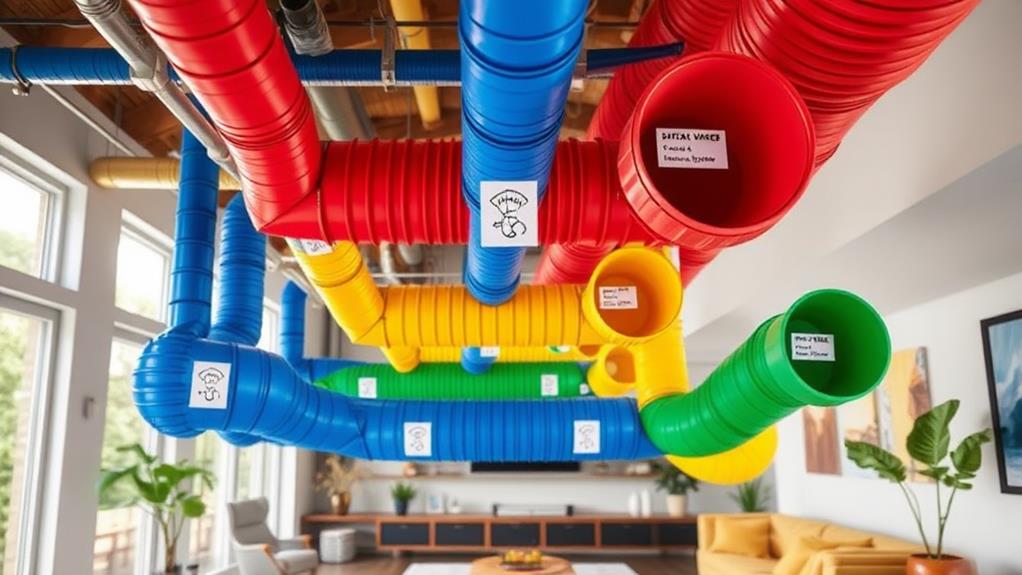
The implementation of color-coded ducting systems within residential environments serves as an essential component in enhancing overall home safety. Each distinct color—ranging from red and black for electrical systems to yellow for gas lines—provides a visual framework that facilitates the identification and management of various utilities. This systematic approach not only aids in preventing accidents but also promotes efficient maintenance practices. However, while the benefits of these color codes are evident, the implications of their usage extend beyond mere identification, prompting a deeper examination of their influence on safety protocols and emergency responses.
Red and Black for Electricity
In the field of electrical infrastructure, the use of red and black ducting plays a crucial role in ensuring safety and operational efficiency. Red ducting is designated for high-voltage power cables, providing a clear visual indicator of potential hazards, thereby enhancing electrical safety.
Conversely, black ducting is used for standard electrical cables, distinguishing everyday wiring from critical systems. This clear color coding supports effective cable identification strategies, facilitating quick recognition and appropriate handling during installation, maintenance, and emergencies.
Orange for Street Lighting
Street lighting systems play a pivotal role in urban infrastructure, and the use of orange ducting is essential for identifying the cables that power these systems. This distinct color facilitates effective cable identification, ensuring that maintenance crews can quickly locate and address any issues.
By streamlining the process, orange ducting enhances maintenance efficiency, allowing for timely repairs and routine checks in accordance with established safety protocols. Moreover, the clear marking of these cables aids in upgrades planning, ensuring that any modifications to lighting systems are executed with precision.
The implementation of orange ducting ultimately contributes to a safer urban environment, as it reduces the likelihood of accidents during maintenance activities and supports the uninterrupted functioning of essential street lighting services.
Yellow for Gas Safety
The importance of yellow ducting in identifying gas pipelines cannot be exaggerated, as it plays a significant role in ensuring safety during construction and maintenance activities. Yellow ducting serves as a clear visual cue for workers, indicating the presence of gas lines and thereby promoting excavation safety. This awareness is essential for preventing accidental damage during gas line maintenance, which could lead to hazardous leaks or explosions.
Green for CCTV Security
Identifying green tubing is vital for the effective management of CCTV security systems. This color designation specifically indicates the cabling associated with security cameras, which plays a pivotal role in home surveillance and property protection. Properly labeled green tubing ensures that the installation and maintenance of these systems are carried out efficiently, minimizing the risk of interruptions to video feeds.
The integrity of a CCTV system is crucial, as it directly impacts the security of a residence or business. By utilizing green tubing, property owners can promptly locate and address any issues related to their surveillance infrastructure. Ultimately, the clear identification of green tubing not only enhances operational efficiency but also contributes significantly to the overall safety and security of the premises.
Blue for Water Supply
In the field of infrastructure, blue ducting serves a critical function by designating potable water pipelines. This clear identification is essential for ensuring that water supply systems are maintained effectively, thereby promoting water conservation. By utilizing blue ducting, professionals can quickly locate and manage water lines, reducing the risk of accidental damage during construction or plumbing maintenance activities.
The visibility of blue ducting not only enhances efficiency but also safeguards public health by preventing contamination of drinking water. Proper understanding of blue ducting supports adherence to safety regulations, ultimately fostering a reliable water distribution network.
The strategic use of blue ducting is integral to both operational efficiency and the safeguarding of essential water resources.
Conclusion
To sum up, the implementation of color-coded ducting systems serves as an essential measure for enhancing home safety. Each color—red and black for electricity, orange for street lighting, yellow for gas, green for CCTV security, and blue for water supply—provides clear visual cues that facilitate the identification and maintenance of essential utility systems. This systematic approach not only minimizes the risk of accidents but also promotes effective management of resources, ultimately safeguarding the well-being of residents.