
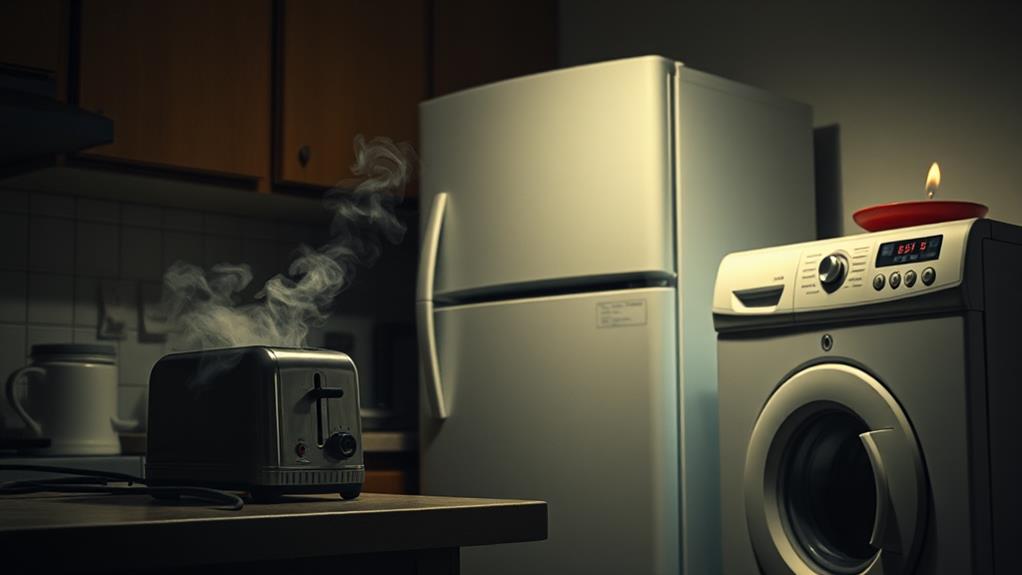
The prevalence of household fires linked to home appliances warrants careful examination. Especially, cooking appliances rank as the predominant source, responsible for nearly half of accidental fires in English residences. Additional concerns arise from electrical equipment misuse and faulty appliances and leads, which greatly heighten risks. As the safety of our living environments hinges on proper maintenance and awareness, understanding the intricacies of these hazards is essential. What preventative measures can homeowners implement to mitigate these risks effectively?
Cooking Appliances
Cooking appliances pose a substantial fire hazard within the home, accounting for 48% of all accidental fires in English households. Among these, cookers are the primary culprits, responsible for 53% of appliance-related fires. Other notable risks arise from ring/hot plates and grills/toasters. Factors contributing to these incidents include unattended cooking, overheating, and flammable materials positioned too close to heat sources.
Moreover, the misuse of appliances, such as overloading circuits, exacerbates the danger. To lessen these risks, it is crucial to adhere to manufacturer guidelines, maintain a clean cooking environment, and ensure that smoke alarms are functional. Regular inspection and maintenance of cooking appliances can markedly reduce the likelihood of fire incidents, safeguarding both lives and property.
Electrical Equipment Misuse
Frequently overlooked, the misuse of electrical equipment greatly contributes to household fire risks, accounting for 34% of accidental fires in English homes.
Common practices such as overloading extension cords, using damaged cables, and employing appliances for unintended purposes greatly heighten the likelihood of fire incidents. Additionally, neglecting to unplug devices when not in use can lead to overheating and potential ignition.
Proper usage of electrical equipment, including adhering to manufacturer guidelines, is essential in preventing such hazards. Regular inspections of appliances and their cords can identify early signs of wear or damage, thereby mitigating fire risks.
Awareness and proactive measures are essential to guarantee electrical safety within the home environment.
Faulty Appliances and Leads
Faulty appliances and leads represent a essential risk factor in household fire incidents, contributing to 15% of accidental fires in English homes. Common issues include frayed cords, damaged plugs, and outdated wiring, which can lead to electrical shorts or overheating. Appliances such as toasters and kettles frequently exhibit these faults due to their high usage. Regular inspections and maintenance of electrical equipment are crucial in mitigating risks.
Additionally, it is vital to avoid overloading sockets and using damaged extension leads. Homeowners should guarantee all appliances are registered for safety notifications and replace any faulty equipment promptly. By adopting these preventative measures, the likelihood of appliance-related fires can be notably reduced, safeguarding both property and lives.
Washing Machines
Washing machines, essential components of modern households, pose significant fire hazards if not properly maintained. In the 2019/20 period, they were linked to over 600 accidental fires in England, primarily due to faults such as heater control relay failures and capacitor malfunctions. These electrical faults can lead to overheating, sparking, and, ultimately, ignition of surrounding materials.
Regular maintenance is essential; homeowners should inspect power cords for wear and tear, ensuring connections are secure and undamaged. Additionally, avoiding overloading the machine and using it according to manufacturer guidelines can mitigate risks. It is critical to remain vigilant, as timely intervention can prevent potential disasters associated with washing machines.
Tumble Dryers
Although tumble dryers are essential for quickly drying clothes, they can pose significant fire hazards if not properly maintained. A primary risk arises from lint accumulation, which can obstruct airflow and ignite during operation. Regular cleaning of filters after each use is vital to mitigate this hazard.
Additionally, failing to inspect venting systems for blockages can worsen fire risks. Overloading a tumble dryer may also lead to overheating, increasing the likelihood of ignition. It is essential to make sure that appliances are installed according to manufacturer specifications and that any signs of malfunction, such as unusual noises or burning smells, are addressed immediately.
Adopting these preventive measures can greatly reduce the risk of tumble dryer-related fires in homes.
Heating Equipment
Heating equipment plays a pivotal role in maintaining home comfort, especially during colder months. However, if not properly maintained, it also poses significant fire risks.
Common sources of heating-related fires include space heaters, fireplaces, and furnaces. Space heaters can ignite nearby flammable materials if placed too close, while improper installation or maintenance of fireplaces and furnaces can lead to hazardous situations.
Regular inspections and servicing of heating systems are essential in mitigating risks. Homeowners should guarantee adequate clearance around heating devices and avoid using extension cords with space heaters. Additionally, it is crucial to have functioning smoke alarms and carbon monoxide detectors in the home to provide early warnings in case of emergencies related to heating equipment.
Electrical System Issues
Electrical system issues represent a significant fire hazard within homes, complementing the risks associated with heating equipment. Faulty wiring, malfunctioning outlets, and the misuse of extension cords contribute substantially to household fires. Overloaded circuits and outdated electrical systems elevate the risk of ignition, as they may not support modern energy demands.
Additionally, appliances with internal faults, such as washing machines, can initiate fires due to heater control relay faults or capacitor failures. Regular maintenance, including inspection and replacing old cables and leads, is pivotal in mitigating these risks.
Homeowners are advised to utilize appliances according to manufacturer specifications and to consult qualified electricians for complex electrical tasks, thereby ensuring a safer living environment.
Frequently Asked Questions
How Can I Test if My Smoke Alarms Are Working?
To test smoke alarms, press the test button until an audible alarm sounds. Additionally, make sure alarms are regularly cleaned and replaced every ten years, or as recommended by the manufacturer, for best functionality and safety.
What Should I Do if My Appliance Catches Fire?
If an appliance catches fire, immediately disconnect the power if safe, evacuate the area, and call emergency services. Do not use water on electrical fires; use a powder extinguisher if available and safe to do so.
Are There Specific Fire Risks in Older Homes?
Older homes often present specific fire risks due to outdated wiring, insufficient electrical systems, and the potential presence of flammable materials. Regular inspections and updates to electrical components are essential for enhancing safety in these residences.
How Often Should I Replace My Fire Alarms?
Fire alarms should be replaced every 10 years to guarantee peak functionality. Additionally, alarms should be regularly tested monthly and batteries replaced annually to maintain safety and readiness in the event of a fire emergency.
What Are the Signs of an Electrical Appliance Malfunction?
Signs of an electrical appliance malfunction include unusual noises, burning smells, flickering lights, overheating surfaces, tripped circuit breakers, and frequent power interruptions. Promptly addressing these indicators can prevent potential hazards and guarantee safety in the home.
Conclusion
To conclude, the prevalence of household fires attributed to cooking appliances underscores the importance of following safety protocols and manufacturer guidelines. Misuse of electrical equipment and faulty appliances significantly increase fire risks. Routine maintenance and inspections of washing machines, tumble dryers, and heating equipment further reduce potential hazards. Guaranteeing operational smoke alarms and upholding a tidy environment are indispensable preventive measures. Alertness and proactive handling of home appliance safety are key in decreasing fire incidents.