

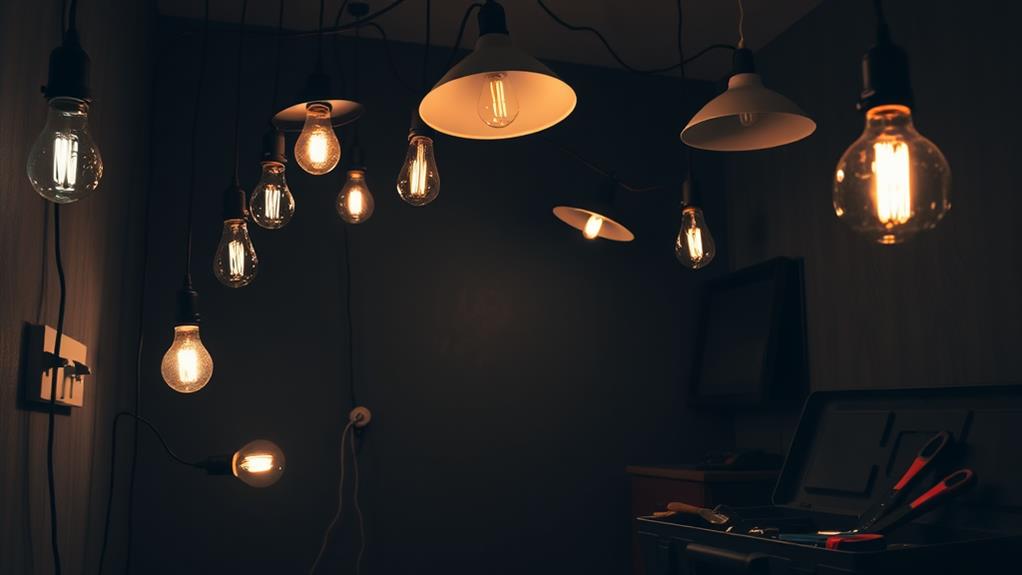
Lighting issues can disrupt daily activities to a large extent, stemming from a variety of sources such as electrical surges, faulty circuit breakers, and deteriorating components. Identifying the root cause of these problems is essential for effective resolution, whether it involves simple bulb replacements or more complex electrical diagnostics. A systematic approach to troubleshooting can improve both safety and functionality in any environment. Understanding these common issues is the first step; however, knowing how to implement the right fixes can be the key to maintaining an efficient lighting system. What strategies can be used to maximize performance?
Common Causes of Light Issues
Light issues can stem from a variety of common causes, with four primary factors frequently at play.
First, preventing surges is important, as they can greatly reduce the lifespan of light bulbs by wearing down filaments.
Second, understanding circuit breakers is crucial; a tripped breaker can interrupt power and cause lights to fail.
Third, the condition of ballasts plays a crucial role in maintaining consistent light output; a malfunctioning ballast can lead to flickering or dim lighting.
Lastly, routine filament maintenance is necessary to ensure best performance, as a burnt-out filament will require replacement. By addressing these causes, one can effectively mitigate light problems and enhance the longevity of lighting fixtures.
Troubleshooting Light Bulb Problems
Addressing light bulb problems requires a systematic approach to identify and resolve the underlying issues. Begin by checking for common causes, such as a blown bulb or a tripped circuit breaker. Preventing bulb burnout is vital; make sure that the voltage matches the bulb’s specifications to avoid premature failure.
If flickering persists, troubleshoot faulty switches and inspect for any damaged wires that may require replacing. Regular socket maintenance is important; avoid over-tightening bulbs, as this can flatten contacts, leading to poor connections. If the socket appears compromised, consider replacing it entirely.
Fixing Light Switch and Socket Issues
When encountering problems with light switches and sockets, it is crucial to systematically diagnose the issue to ensure safe and effective repair. Common causes include damaged wires, burnt-out switches, or malfunctioning sockets.
First, check if the circuit breaker has tripped or if the light bulb has blown. If the switch is unresponsive, consider replacing switches to restore functionality.
For socket maintenance, make sure that light bulbs are properly seated; over-tightening can flatten contacts, impairing performance. If there are persistent issues, inspect for loose connections within terminals.
In cases where simple fixes do not resolve the problem, it may be necessary to consult a qualified electrician for thorough repairs or replacements to guarantee safety and compliance with electrical standards.
Conclusion
To conclude, understanding the common causes of light problems, such as surges, circuit interruptions, and ballast malfunctions, facilitates effective troubleshooting. Addressing issues related to light bulbs, switches, and sockets is essential for maintaining ideal lighting conditions. Implementing routine maintenance and promptly addressing underlying causes not only enhances performance but also extends the lifespan of lighting fixtures. Adopting these measures contributes to a consistently well-lit environment, thereby improving safety and functionality in residential and commercial settings.