

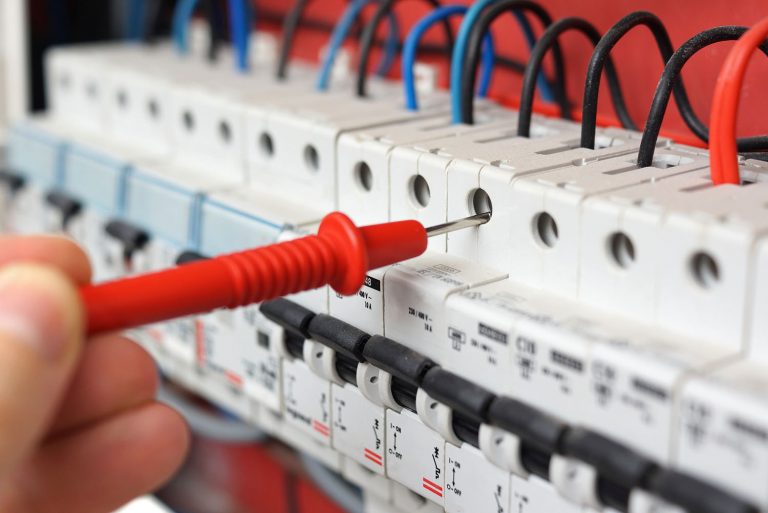
Common Causes and When to Call a Devizes Electrician
You’re halfway through cooking Sunday lunch when half the kitchen goes dark . You troop out to the cupboard, flip the switch back up, and carry on.
Then it happens again the next day.
A fuse box that keeps tripping is your home’s way of telling you something’s wrong. It’s doing it’s job, shielding you from a fault, but if it’s happening regularly, it’s time to find out why.
Here are the most common causes we see at properties across Devizes and Wiltshire, and what to do about each one.
How your fuse box protects your home
Before we get into faults, it helps to understand what’s actually happening inside your consumer unit when something trips.
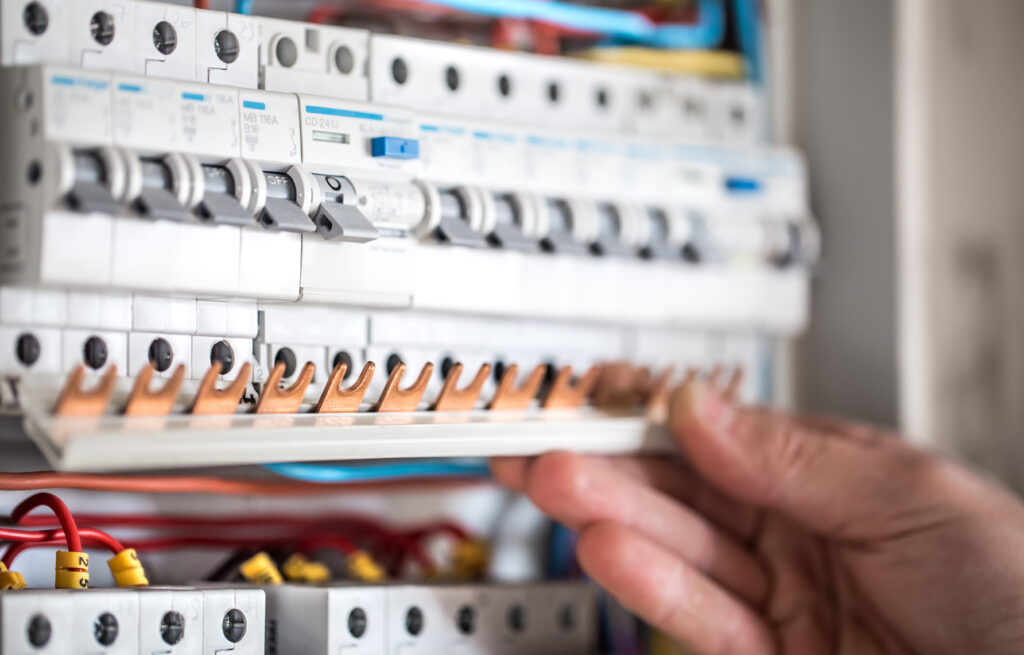
A modern split load consumer unit contains two types of protective device, you’ve got miniature circuit breakers (MCBs), which protect individual circuits, one for your kitchen ring main, one for your upstairs lighting, one for your shower. Each MCB is rated for a specific current. Pull more than that, and it trips.
Then there’s the residual current device, or RCD. This monitors the balance of current flowing in and out of a circuit, if even a tiny amount of current leaks to earth, say, through a damaged cable or a wet connection, the RCD detects the imbalance and kills the power in milliseconds. That’s what stops you getting a serious electric shock.
Some newer boards use RCBOs, which combine both functions into a single device per circuit. The advantage? If one circuit develops a fault, only that RCBO trips, everything else stays on, with a dual RCD board, a fault on one circuit can knock out half the house. That’s why so many homeowners end up standing in the dark wondering what happened.
Understanding which device has tripped, the RCD, an individual MCB, or the main switch, tells you a lot about where the problem sits, first thing we check when we arrive at a job.
You’ve overloaded a circuit
This is the most common cause, in older homes . If you’ve got a kettle, toaster, microwave and air fryer all running on the same kitchen circuit, you’re pulling more current than it was designed for. The MCB trips to stop the wiring from overheating.
Kitchen circuit overload is something we see constantly in properties around Devizes. A typical ring main is rated at 32 amps, sounds like plenty, until you tally the draw from a 3kW kettle, a 1.5kW toaster and a 2kW air fryer all going at once. You’re north of 28 amps before anyone’s turned the oven on.
The fix: Spread your high-draw appliances across different sockets on separate circuits, if it keeps happening, get a qualified electrician to look at adding a dedicated circuit for kitchen appliances, a simple job in most homes, a few hours of work and a proper solution rather than a workaround.
Older properties are more prone to this because they were wired with fewer circuits. A 1970s kitchen might have a single radial circuit serving every socket in the room, modern kitchens need more.
A faulty appliance is tripping your electrics
Sometimes the problem isn’t your wiring at all, it’s something you’ve plugged into it . An old kettle. A dodgy phone charger. A tumble dryer that’s seen better days. Any of these can develop an internal fault that causes the breaker to trip.
A common giveaway the trip only happens when you use a specific appliance, or at a specific time of day. If your electrics cut out every time you run the washing machine on a hot cycle, that’s a strong clue.
The fix: Unplug everything on that circuit, reset the breaker, then plug things back in one at a time. Whichever one trips it again is your culprit, if you want to be thorough, PAT testing can confirm whether a suspect appliance is safe to keep using or whether it needs replacing.
Worth knowing a faulty appliance can cause either an MCB trip (if it’s drawing too much current) or an RCD trip (if it has an earth fault internally). The type of trip tells us a lot during fault finding.
Damaged wiring, loose connections and rodent damage
This one’s more serious, if wiring inside your walls has come loose, frayed, or been chewed through, it can cause intermittent faults that trip the breaker without warning. One day everything’s fine, the next, you’re resetting the board twice before breakfast.
Loose connections are a particular problem in older Wiltshire properties where the wiring has been in place for 30 or 40 years . Terminals at sockets, light fittings and junction boxes can work themselves free over time, creating an arcing fault that generates heat and trips the RCD. You might notice a faint burning smell near a socket before the trip happens. Take that seriously.
And then there’s rodent damage, mice are surprisingly common culprits, they gnaw through cable insulation in loft spaces and under floorboards, exposing the conductors. This creates a live-to-earth fault that the RCD picks up, we see this regularly in cottages and older homes around Pewsey and the Vale.
The fix: This isn’t a DIY job. You need an electrician to carry out proper fault finding, including insulation resistance testing, to trace where the damage is and repair it safely. If the damaged wiring turns out to be wide, it may point towards a partial or full rewire of the affected circuits.
Water ingress and moisture faults
Had a leak, even a small one from an upstairs bathroom or a bit of condensation in the wrong spot? Water can find it’s way into back boxes, junction boxes or cable runs. Moisture in electrical connections is one of the trickiest faults to pin down because it comes and goes, your fuse box trips on a damp morning, then behaves itself for a week.
A back box fault caused by water ingress will not always show obvious signs. Sometimes the only clue is nuisance tripping that doesn’t follow a pattern, or an RCD that trips overnight when the temperature drops and condensation forms.
The fix: Stop using the affected circuit and get it checked. Don’t just keep resetting the breaker, we’ll test for earth leakage across each circuit to find where the moisture is getting in, then fix the source as well as the electrical fault, ignoring water and electricity problems is genuinely dangerous.
When to stop resetting and call an electrician
The occasional trip during a thunderstorm? Normal.
But there’s a clear line between a one-off and a pattern. You should call a qualified electrician if the circuit breaker keeps tripping more than once a week. Call if the breaker will not reset at all . Call if you smell burning or see scorch marks anywhere near a socket or switch, call if you’ve unplugged everything and it’s still tripping, or if you simply do not know why it’s happening.
That last one matters most. A breaker that trips constantly with no obvious cause is telling you something, and ignoring it leads to real problems.
If your trip switch keeps going off and you’ve been putting up with it for weeks, stop resetting it. An intermittent electrical fault doesn’t fix itself. It gets worse.
Under current BS 7671 wiring regulations (18th edition), your electrical installation should be safe, properly protected and tested. If yours isn’t behaving, something is out of spec, and a proper inspection will tell you exactly what.
Book a fault-finding visit in Devizes
If your fuse box is giving you grief, give us a call, we’re a NICEIC registered electrician covering Devizes, Pewsey, Marlborough, Calne, Melksham, Trowbridge and the surrounding villages.
Most fault-finding jobs are sorted in a single visit . We’ll test every circuit, trace the problem, and explain what we’ve found in plain English, not just a list of codes. If your consumer unit needs replacing or your home needs a fuse board upgrade, we’ll tell you honestly and quote you upfront before doing any work.
Not sure whether your wiring is up to scratch? An electrical installation condition report (EICR) is the best place to start, it’ll tell you whether your installation meets current safety standards, or whether it’s time for an upgrade.
No upselling, no scare tactics, just an honest answer about what your home actually needs.