
This ultimate guide to landlord electrical safety certificates in 2026 covers everything you need to know to stay legally compliant, protect your tenants, and avoid crippling financial penalties. A striking 49% of all Electrical Installation Condition Reports (EICRs) across the UK are due for renewal this year, creating an unprecedented demand surge driven by the five-year anniversary of the 2021 mandatory safety regulations — meaning landlords who delay booking their inspections now risk long waiting lists, higher costs, and serious legal exposure.
Key Takeaways
| Question | Answer |
|---|---|
| What is a landlord electrical safety certificate? | It is a formal document produced after an Electrical Installation Condition Report (EICR) confirming your rental property’s wiring is safe and compliant with current regulations. |
| Is an EICR legally required for landlords in 2026? | Yes. The Electrical Safety Standards in the Private Rented Sector (England) Regulations 2020 require all private landlords to hold a valid EICR, renewed every five years. |
| How much does an EICR cost in 2026? | A standard EICR for a 3-bedroom house typically costs between £220 and £320 + VAT, with additional costs for any remedial work required. |
| What is the fine for not having a valid electrical safety certificate? | Fines can reach up to £40,000 as of 2026, following a legislative increase from the previous £30,000 cap. |
| Who can carry out an EICR? | Only a qualified, competent electrician registered with a recognised body such as NICEIC can legally conduct and certify an EICR for a rental property. |
| What happens if a rental property fails an EICR? | The landlord must complete all required remedial work within 28 days (or a shorter timeframe if specified) and obtain written confirmation from the electrician that it has been rectified. |
| Where can I get a certified EICR in Wiltshire? | We provide EICR testing across Wiltshire, covering rental properties of all types with full NICEIC certification. |
What Is a Landlord Electrical Safety Certificate?
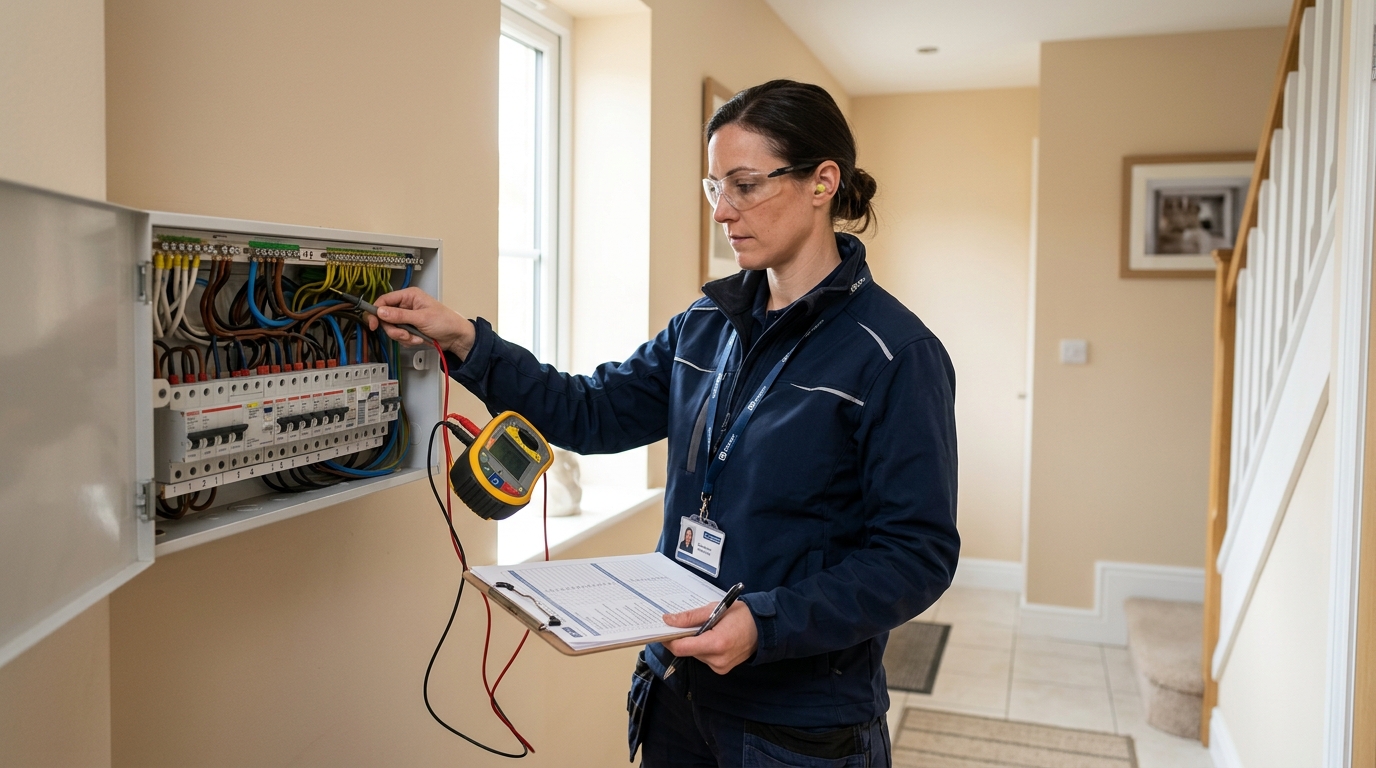
A landlord electrical safety certificate, more formally known as an Electrical Installation Condition Report (EICR), is the official document produced by a qualified electrician after a thorough inspection of your rental property’s wiring, consumer unit, sockets, switches, and all fixed electrical installations.
The report classifies any issues found using a colour-coded system that tells you exactly what action, if any, needs to be taken. It is not a pass/fail document in the traditional sense — it is a detailed health check with a formal outcome of either “Satisfactory” or “Unsatisfactory.”
A satisfactory EICR is your landlord electrical safety certificate. It confirms the installation is safe for continued use, protects you legally, and must be shared with your existing tenants within 28 days and with any new tenant before they move in.
Why the Ultimate Guide to Landlord Electrical Safety Certificates in 2026 Matters More Than Ever
The stakes around electrical safety certificates have never been higher for landlords. The combination of a mass renewal cycle, significantly increased penalties, and a growing shortage of qualified inspectors makes 2026 a genuinely critical year for the private rented sector.
Electrical failure or malfunction accounts for 15% of all fatal home fires in the UK. Beyond the moral obligation to protect your tenants, the legal and financial risks of non-compliance are now serious enough to threaten your entire property portfolio.
Local authority enforcement has sharpened significantly. Councils across England now have clearer powers to issue civil penalty notices, and they are using them. The question is not whether you can afford to get your electrical safety certificate — it is whether you can afford not to.
Our full range of electrical services is specifically designed for landlords who need reliable, certified inspections without the administrative headache.
The Legal Requirements for Landlord Electrical Safety Certificates in 2026
The Electrical Safety Standards in the Private Rented Sector (England) Regulations 2020 set out clear obligations for every private landlord. In 2026, these rules apply to virtually all tenancies in the private rented sector, with no exceptions for short-term or HMO landlords.
Here is what the law requires of you as a landlord in 2026:
- Have the electrical installation inspected and tested by a qualified person at least every five years
- Obtain a written report (your EICR) with results and details of any work required
- Supply a copy of the EICR to each existing tenant within 28 days of the inspection
- Give a copy to any prospective tenant before they move in
- Supply the local authority with a copy of the report within 7 days of a written request
- Retain the EICR until the next inspection and give a copy to the next inspector
- Complete any remedial work identified within 28 days (or sooner if specified in the report)
Failure to comply with any of these requirements can result in the local authority arranging remedial work at the landlord’s expense — and issuing a financial penalty on top.
Understanding EICR Grades: What Your Electrical Safety Certificate Report Means
When your electrician completes the inspection, every finding is assigned a code. Understanding these codes is essential for every landlord reviewing their electrical safety certificate documentation.
| Code | Meaning | Action Required |
|---|---|---|
| C1 – Danger Present | Risk of injury is present | Immediate remedial action required. The electrician may make safe before leaving. |
| C2 – Potentially Dangerous | Potential danger exists | Urgent remedial work required — your report will be classed as Unsatisfactory. |
| C3 – Improvement Recommended | Does not meet current standards but not dangerous | Remedial work recommended but report can still be Satisfactory. |
| FI – Further Investigation | Issue requires further investigation | Investigation must be completed without delay — report is Unsatisfactory. |
A property with only C3 codes can still receive a Satisfactory certificate. Any C1, C2, or FI code results in an Unsatisfactory outcome — meaning you do not yet hold a valid landlord electrical safety certificate until all required works are completed and the installation is re-tested.
The two most common reasons for EICR failure are missing RCD protection and incorrect bathroom light fittings (exposed bulbs without waterproof covers). Addressing these before booking your inspection can save you both time and money.
What Happens During an EICR Inspection for a Rental Property?
Understanding the inspection process helps you prepare your property, brief your tenants, and set realistic expectations about the time involved. A thorough EICR is not a quick visit — for a standard 3-bedroom property, expect the inspection to take between 3 and 5 hours.
Here is what the electrician will check during a landlord electrical safety inspection:
- The consumer unit (fuse board) — checking for RCD protection, correct circuit breaker ratings, and signs of overheating or damage
- All fixed wiring — including cables behind walls and ceilings, and their connection points
- Sockets, switches, and light fittings — checking for correct installation, earthing, and condition
- Earthing and bonding arrangements throughout the property
- Special locations — kitchens, bathrooms, and outdoors where additional zone requirements apply
- Any previous defects noted on the last EICR to confirm they have been addressed
The electrician will need access to all rooms, the consumer unit, and ideally the meter cupboard. Tenants should be informed in advance that the power may be turned off to specific circuits during testing — this is standard procedure and not a sign of a problem.
How Often Do Landlords Need an Electrical Safety Certificate in 2026?
The standard renewal cycle for a landlord electrical safety certificate is every five years. This is the legal minimum — your electrician may recommend more frequent testing if significant issues were found during the last inspection, the property is older, or there have been major works since the last certificate was issued.
For HMOs (Houses in Multiple Occupation), the same five-year rule applies, but given the higher occupancy levels and greater electrical load typical in shared properties, we often recommend budgeting for more detailed inspections and, where necessary, proactive consumer unit upgrades to ensure continued compliance.
If you are unsure whether your current certificate is valid, do not guess — contact a qualified electrician immediately. Our specialist landlord electrical services include a free initial consultation to check your current compliance status.
A visual guide showing the five steps to EICR certification for rental properties in 2026. Perfect for landlords aiming for compliant electrical safety certificates.
What to Do If Your Rental Property Fails an EICR
Receiving an Unsatisfactory EICR outcome is not the end of the world — but it does require swift, documented action. The 28-day deadline for completing remedial works is strict, and local authorities can and do follow up.
Here is the step-by-step process to follow after a failed electrical safety inspection:
- Read the report carefully. Identify every C1, C2, and FI item listed. These are the defects that must be resolved before your certificate can be reissued.
- Get a written quote for remedial work. Use the same NICEIC-registered electrician where possible — they already understand the installation and can work more efficiently.
- Schedule the works promptly. Do not leave it until day 27 — contractor availability can be limited, especially in 2026 with the high volume of inspections and remedial work nationally.
- Obtain written confirmation. Once the remedial work is complete, the electrician must provide written confirmation that the installation meets the required standard. This serves as your updated landlord electrical safety certificate documentation.
- Distribute the updated report. Send the confirmation to all tenants within 28 days and retain it for your records and future inspections.
For older properties where the underlying wiring is the root cause of failure, a partial or full rewire may be necessary. Our team handles rewiring across Wiltshire with minimal disruption and full certification on completion.
The Financial Risks: What Non-Compliance Really Costs in 2026
Many landlords underestimate the financial exposure of failing to hold a valid electrical safety certificate. The direct costs of non-compliance go well beyond the fine itself.
Beyond the headline penalty, consider these secondary financial consequences:
- Your landlord insurance may be invalidated if a claim arises and you cannot produce a valid EICR
- You cannot legally serve a Section 21 notice to end a tenancy without a valid electrical safety certificate, removing a key property management tool
- Local authorities can carry out remedial works and charge you for them, often at premium contractor rates
- Reputational damage with letting agents and future tenants can affect long-term rental income
How to Choose the Right Electrician for Your Landlord Electrical Safety Certificate in 2026
Not every electrician is qualified to issue a landlord electrical safety certificate. The law requires that inspections are carried out by a “qualified and competent” person — and in practice, this means someone registered with a recognised body such as NICEIC, NAPIT, or ELECSA.
Use these criteria when selecting an electrician for your EICR:
- NICEIC or equivalent registration — verifiable on the relevant scheme’s online register
- Experience with rental properties — landlord EICRs have specific reporting requirements that differ from homeowner inspections
- Clear written quotes — covering both the inspection fee and a transparent approach to any remedial work estimates
- Availability to provide the written confirmation letter after remedial works — this is a legal requirement and not all electricians are thorough with their paperwork
- Local knowledge — electricians familiar with the local housing stock (particularly older and period properties) will complete inspections more accurately
We are NICEIC registered and work exclusively with landlords, homeowners, and businesses across Wiltshire. If you need a qualified electrician in the area, our Devizes electrician team is ready to help with all EICR and certification requirements.
EICR Costs in 2026: What Landlords Should Budget For
A standard EICR for a typical 3-bedroom rental property in 2026 costs between £220 and £320 + VAT. Larger properties, HMOs, or properties with complex electrical systems will typically be quoted higher.
Here is a realistic cost breakdown landlords should plan for:
| Item | Typical Cost in 2026 | Notes |
|---|---|---|
| EICR (1-2 bed property) | £150 – £250 + VAT | Lower complexity, fewer circuits |
| EICR (3-4 bed property) | £220 – £320 + VAT | Standard rental property range |
| Consumer unit upgrade (RCD protection) | £400 – £700 + VAT | Most common C2 remedial requirement |
| Bathroom light fitting replacement | £80 – £150 + VAT per fitting | IP-rated fittings for zones |
| Partial rewire (specific circuits) | £500 – £2,000 + VAT | Depends on scope and access |
| Full house rewire | £3,500 – £8,000+ + VAT | Size, age, and construction type are key factors |
With 12,602 EICRs needing to be completed every single day in 2026 to keep the UK’s 4.6 million rental properties compliant, there is a genuine risk that inspection prices will rise as demand outstrips supply. Booking your inspection now protects both your compliance status and your budget.
Special Considerations: Electrical Safety Certificates for Heritage and Older Properties
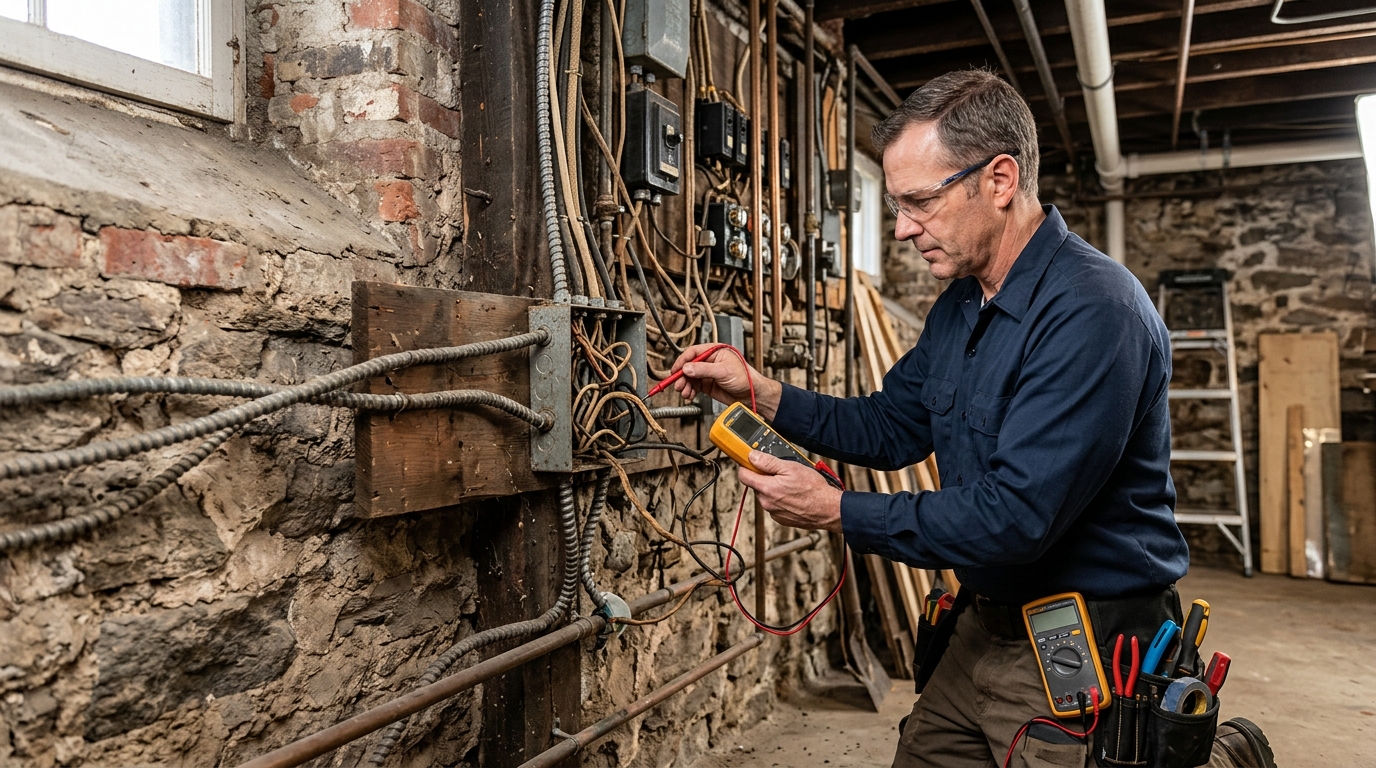
A significant proportion of Wiltshire’s rental stock consists of period and heritage properties — buildings constructed well before modern wiring standards existed. These properties present unique challenges for EICR inspections and, where remedial work is needed, for the subsequent repair or rewiring works.
Key considerations for landlords with older properties include:
- Fabric sensitivity — running new cables through solid stone or brick walls requires specialist techniques to avoid damage to historic materials
- Insurer requirements — heritage properties, particularly thatched properties, often have specific electrical compliance requirements set by their insurers that go beyond the legal minimum
- Legacy wiring — rubber-insulated wiring, aluminium wiring, or older wiring systems may be present and will almost certainly generate C1 or C2 codes during an EICR
- Consumer unit location — older properties may have the consumer unit in a non-standard location, which can affect the scope and cost of upgrades
Our electrical safety guidance for heritage and thatched properties covers the specific requirements for these property types in detail.
Conclusion
This ultimate guide to landlord electrical safety certificates in 2026 has covered every aspect of what you need to know — from the legal framework and inspection process, to understanding your EICR report, managing remedial works, and choosing the right qualified electrician.
The bottom line is straightforward: holding a valid landlord electrical safety certificate is not optional, it is a legal requirement that protects your tenants, your investment, and your legal right to manage your property. With 2026 being the peak renewal year for certificates issued under the 2021 regulations, acting promptly is more important than ever.
We recommend every landlord checks their current EICR expiry date today and books their next inspection well in advance of the deadline. If your property needs remedial works or a full rewire to achieve a satisfactory certificate, our team is ready to help — get in touch for a no-obligation quote and we will take care of the entire process from inspection through to certified completion.
Frequently Asked Questions
Is a landlord electrical safety certificate the same as an EICR in 2026?
Yes — the landlord electrical safety certificate is the document produced as the outcome of an Electrical Installation Condition Report (EICR). When the inspection returns a Satisfactory result, that EICR report serves as your formal electrical safety certificate for the rental property.
What happens if I don’t have an electrical safety certificate for my rental property in 2026?
Without a valid landlord electrical safety certificate, you face fines of up to £40,000, you cannot legally serve a Section 21 eviction notice, and your landlord insurance may be invalidated in the event of a claim. Local authorities also have the power to carry out remedial works themselves and charge the costs back to you.
How long does it take to get a landlord electrical safety certificate?
The inspection itself typically takes 3 to 5 hours for a standard 3-bedroom property, and the EICR report is usually issued within a few days of the visit. If remedial works are required, you have 28 days to complete them before the certificate can be formally issued as Satisfactory.
Can a tenant refuse access for an EICR inspection?
A landlord must provide at least 24 hours’ written notice and make every reasonable effort to arrange the inspection at a mutually convenient time. If a tenant unreasonably refuses access after multiple attempts, landlords should document each attempt carefully — this evidence can be used to demonstrate compliance efforts to the local authority.
Is an EICR worth getting even if it is not yet due?
Yes, particularly in 2026. With unprecedented demand for inspections, booking ahead of your legal deadline avoids the risk of contractor shortages and potential periods of non-compliance. For older properties, an early inspection can also identify issues before they become costly emergencies.
What is the most common reason a rental property fails an EICR in 2026?
The two most common failure points are missing RCD protection in the consumer unit (a C2 code requiring an urgent upgrade) and incorrectly specified light fittings in bathrooms. Addressing these before your inspection can save both time and the cost of a re-inspection visit.
Do I need a separate electrical safety certificate for each rental property I own?
Yes — each individual rental property requires its own separate EICR and landlord electrical safety certificate. There is no group or portfolio certificate option. Each property’s electrical installation is assessed independently, and each requires its own documentation to be shared with the tenants of that specific property.