• Ultimate Guide to Landlord Electrical Safety Certificates in 2026

    Ultimate Guide to Landlord Electrical Safety Certificates in 2026

    This ultimate guide to landlord electrical safety certificates in 2026 covers everything you need to know to stay legally compliant, protect your tenants, and avoid crippling financial penalties. A striking 49% of all Electrical Installation Condition Reports (EICRs) across the UK are due for renewal this year, creating an unprecedented demand surge driven by the five-year anniversary of the 2021 mandatory safety regulations — meaning landlords who delay booking their inspections now risk long waiting lists, higher costs, and serious legal exposure.

    Key Takeaways

    Question Answer
    What is a landlord electrical safety certificate? It is a formal document produced after an Electrical Installation Condition Report (EICR) confirming your rental property’s wiring is safe and compliant with current regulations.
    Is an EICR legally required for landlords in 2026? Yes. The Electrical Safety Standards in the Private Rented Sector (England) Regulations 2020 require all private landlords to hold a valid EICR, renewed every five years.
    How much does an EICR cost in 2026? A standard EICR for a 3-bedroom house typically costs between £220 and £320 + VAT, with additional costs for any remedial work required.
    What is the fine for not having a valid electrical safety certificate? Fines can reach up to £40,000 as of 2026, following a legislative increase from the previous £30,000 cap.
    Who can carry out an EICR? Only a qualified, competent electrician registered with a recognised body such as NICEIC can legally conduct and certify an EICR for a rental property.
    What happens if a rental property fails an EICR? The landlord must complete all required remedial work within 28 days (or a shorter timeframe if specified) and obtain written confirmation from the electrician that it has been rectified.
    Where can I get a certified EICR in Wiltshire? We provide EICR testing across Wiltshire, covering rental properties of all types with full NICEIC certification.

    What Is a Landlord Electrical Safety Certificate?

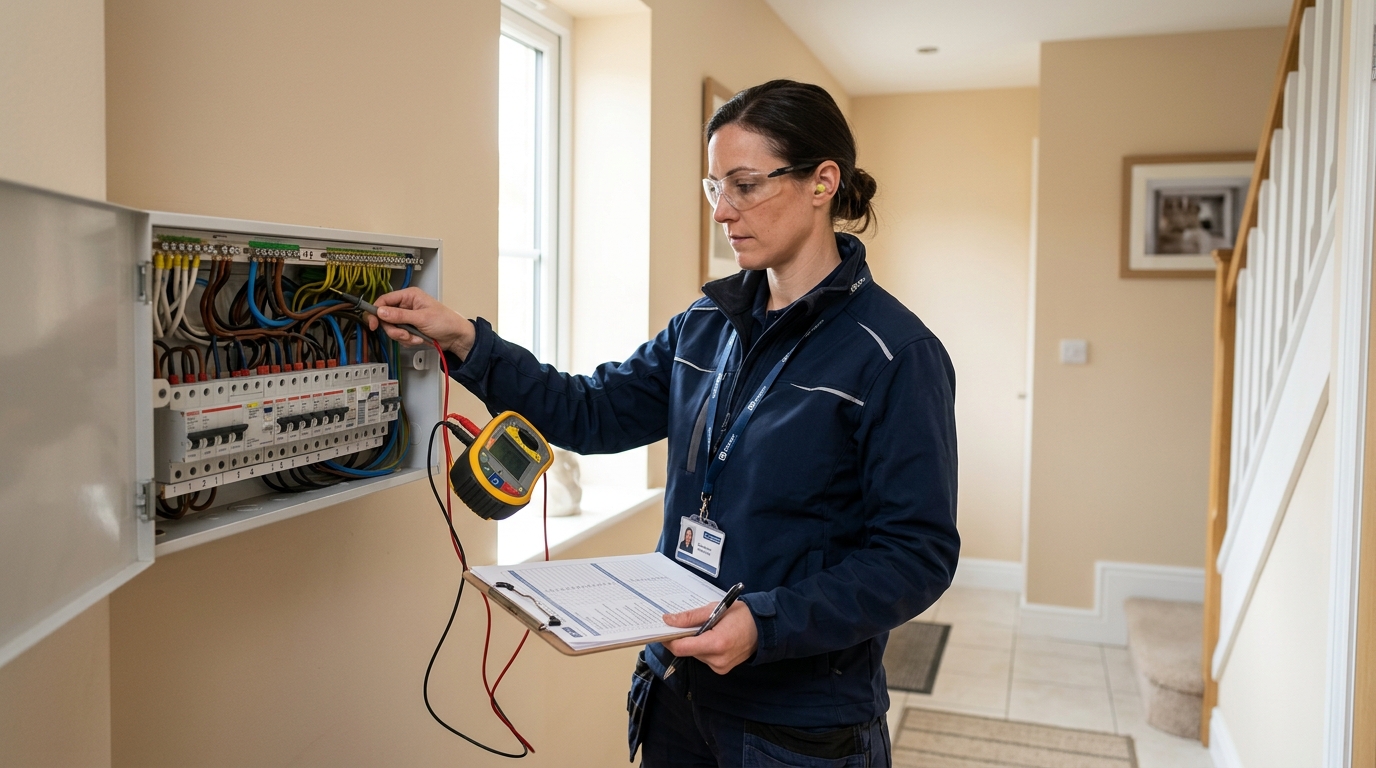
    A landlord electrical safety certificate, more formally known as an Electrical Installation Condition Report (EICR), is the official document produced by a qualified electrician after a thorough inspection of your rental property’s wiring, consumer unit, sockets, switches, and all fixed electrical installations.

    The report classifies any issues found using a colour-coded system that tells you exactly what action, if any, needs to be taken. It is not a pass/fail document in the traditional sense — it is a detailed health check with a formal outcome of either “Satisfactory” or “Unsatisfactory.”

    A satisfactory EICR is your landlord electrical safety certificate. It confirms the installation is safe for continued use, protects you legally, and must be shared with your existing tenants within 28 days and with any new tenant before they move in.

    EICR inspection for landlord electrical safety certificate
    EICR electrical testing illustration

    Why the Ultimate Guide to Landlord Electrical Safety Certificates in 2026 Matters More Than Ever

    The stakes around electrical safety certificates have never been higher for landlords. The combination of a mass renewal cycle, significantly increased penalties, and a growing shortage of qualified inspectors makes 2026 a genuinely critical year for the private rented sector.

    Electrical failure or malfunction accounts for 15% of all fatal home fires in the UK. Beyond the moral obligation to protect your tenants, the legal and financial risks of non-compliance are now serious enough to threaten your entire property portfolio.

    Local authority enforcement has sharpened significantly. Councils across England now have clearer powers to issue civil penalty notices, and they are using them. The question is not whether you can afford to get your electrical safety certificate — it is whether you can afford not to.

    Our full range of electrical services is specifically designed for landlords who need reliable, certified inspections without the administrative headache.

    The Legal Requirements for Landlord Electrical Safety Certificates in 2026

    The Electrical Safety Standards in the Private Rented Sector (England) Regulations 2020 set out clear obligations for every private landlord. In 2026, these rules apply to virtually all tenancies in the private rented sector, with no exceptions for short-term or HMO landlords.

    Here is what the law requires of you as a landlord in 2026:

    • Have the electrical installation inspected and tested by a qualified person at least every five years
    • Obtain a written report (your EICR) with results and details of any work required
    • Supply a copy of the EICR to each existing tenant within 28 days of the inspection
    • Give a copy to any prospective tenant before they move in
    • Supply the local authority with a copy of the report within 7 days of a written request
    • Retain the EICR until the next inspection and give a copy to the next inspector
    • Complete any remedial work identified within 28 days (or sooner if specified in the report)

    Failure to comply with any of these requirements can result in the local authority arranging remedial work at the landlord’s expense — and issuing a financial penalty on top.

    Did You Know?

    32% of landlords are currently at risk of major fines because they are either unsure if their EICR is valid or know they do not have one at all.
    Source: aptnewsinc.com

    Understanding EICR Grades: What Your Electrical Safety Certificate Report Means

    When your electrician completes the inspection, every finding is assigned a code. Understanding these codes is essential for every landlord reviewing their electrical safety certificate documentation.

    Code Meaning Action Required
    C1 – Danger Present Risk of injury is present Immediate remedial action required. The electrician may make safe before leaving.
    C2 – Potentially Dangerous Potential danger exists Urgent remedial work required — your report will be classed as Unsatisfactory.
    C3 – Improvement Recommended Does not meet current standards but not dangerous Remedial work recommended but report can still be Satisfactory.
    FI – Further Investigation Issue requires further investigation Investigation must be completed without delay — report is Unsatisfactory.

    A property with only C3 codes can still receive a Satisfactory certificate. Any C1, C2, or FI code results in an Unsatisfactory outcome — meaning you do not yet hold a valid landlord electrical safety certificate until all required works are completed and the installation is re-tested.

    The two most common reasons for EICR failure are missing RCD protection and incorrect bathroom light fittings (exposed bulbs without waterproof covers). Addressing these before booking your inspection can save you both time and money.

    EICR report guide for landlord electrical safety certificates

    What Happens During an EICR Inspection for a Rental Property?

    Understanding the inspection process helps you prepare your property, brief your tenants, and set realistic expectations about the time involved. A thorough EICR is not a quick visit — for a standard 3-bedroom property, expect the inspection to take between 3 and 5 hours.

    Here is what the electrician will check during a landlord electrical safety inspection:

    • The consumer unit (fuse board) — checking for RCD protection, correct circuit breaker ratings, and signs of overheating or damage
    • All fixed wiring — including cables behind walls and ceilings, and their connection points
    • Sockets, switches, and light fittings — checking for correct installation, earthing, and condition
    • Earthing and bonding arrangements throughout the property
    • Special locations — kitchens, bathrooms, and outdoors where additional zone requirements apply
    • Any previous defects noted on the last EICR to confirm they have been addressed

    The electrician will need access to all rooms, the consumer unit, and ideally the meter cupboard. Tenants should be informed in advance that the power may be turned off to specific circuits during testing — this is standard procedure and not a sign of a problem.

    Electrician conducting EICR inspection

    How Often Do Landlords Need an Electrical Safety Certificate in 2026?

    The standard renewal cycle for a landlord electrical safety certificate is every five years. This is the legal minimum — your electrician may recommend more frequent testing if significant issues were found during the last inspection, the property is older, or there have been major works since the last certificate was issued.

    For HMOs (Houses in Multiple Occupation), the same five-year rule applies, but given the higher occupancy levels and greater electrical load typical in shared properties, we often recommend budgeting for more detailed inspections and, where necessary, proactive consumer unit upgrades to ensure continued compliance.

    If you are unsure whether your current certificate is valid, do not guess — contact a qualified electrician immediately. Our specialist landlord electrical services include a free initial consultation to check your current compliance status.


    Infographic: 5 key steps to EICR certification for rental properties in 2026 (landlord electrical safety certificates)

    A visual guide showing the five steps to EICR certification for rental properties in 2026. Perfect for landlords aiming for compliant electrical safety certificates.

    What to Do If Your Rental Property Fails an EICR

    Receiving an Unsatisfactory EICR outcome is not the end of the world — but it does require swift, documented action. The 28-day deadline for completing remedial works is strict, and local authorities can and do follow up.

    Here is the step-by-step process to follow after a failed electrical safety inspection:

    1. Read the report carefully. Identify every C1, C2, and FI item listed. These are the defects that must be resolved before your certificate can be reissued.
    2. Get a written quote for remedial work. Use the same NICEIC-registered electrician where possible — they already understand the installation and can work more efficiently.
    3. Schedule the works promptly. Do not leave it until day 27 — contractor availability can be limited, especially in 2026 with the high volume of inspections and remedial work nationally.
    4. Obtain written confirmation. Once the remedial work is complete, the electrician must provide written confirmation that the installation meets the required standard. This serves as your updated landlord electrical safety certificate documentation.
    5. Distribute the updated report. Send the confirmation to all tenants within 28 days and retain it for your records and future inspections.

    For older properties where the underlying wiring is the root cause of failure, a partial or full rewire may be necessary. Our team handles rewiring across Wiltshire with minimal disruption and full certification on completion.

    House rewiring for landlord electrical safety compliance

    The Financial Risks: What Non-Compliance Really Costs in 2026

    Many landlords underestimate the financial exposure of failing to hold a valid electrical safety certificate. The direct costs of non-compliance go well beyond the fine itself.

    Beyond the headline penalty, consider these secondary financial consequences:

    • Your landlord insurance may be invalidated if a claim arises and you cannot produce a valid EICR
    • You cannot legally serve a Section 21 notice to end a tenancy without a valid electrical safety certificate, removing a key property management tool
    • Local authorities can carry out remedial works and charge you for them, often at premium contractor rates
    • Reputational damage with letting agents and future tenants can affect long-term rental income
    Did You Know?

    The maximum financial penalty for electrical safety breaches in rental properties has increased to £40,000 as of 2026, up from the previous £30,000 cap — making non-compliance a potentially catastrophic financial risk.

    How to Choose the Right Electrician for Your Landlord Electrical Safety Certificate in 2026

    Not every electrician is qualified to issue a landlord electrical safety certificate. The law requires that inspections are carried out by a “qualified and competent” person — and in practice, this means someone registered with a recognised body such as NICEIC, NAPIT, or ELECSA.

    Use these criteria when selecting an electrician for your EICR:

    • NICEIC or equivalent registration — verifiable on the relevant scheme’s online register
    • Experience with rental properties — landlord EICRs have specific reporting requirements that differ from homeowner inspections
    • Clear written quotes — covering both the inspection fee and a transparent approach to any remedial work estimates
    • Availability to provide the written confirmation letter after remedial works — this is a legal requirement and not all electricians are thorough with their paperwork
    • Local knowledge — electricians familiar with the local housing stock (particularly older and period properties) will complete inspections more accurately

    We are NICEIC registered and work exclusively with landlords, homeowners, and businesses across Wiltshire. If you need a qualified electrician in the area, our Devizes electrician team is ready to help with all EICR and certification requirements.

    EICR Costs in 2026: What Landlords Should Budget For

    A standard EICR for a typical 3-bedroom rental property in 2026 costs between £220 and £320 + VAT. Larger properties, HMOs, or properties with complex electrical systems will typically be quoted higher.

    Here is a realistic cost breakdown landlords should plan for:

    Item Typical Cost in 2026 Notes
    EICR (1-2 bed property) £150 – £250 + VAT Lower complexity, fewer circuits
    EICR (3-4 bed property) £220 – £320 + VAT Standard rental property range
    Consumer unit upgrade (RCD protection) £400 – £700 + VAT Most common C2 remedial requirement
    Bathroom light fitting replacement £80 – £150 + VAT per fitting IP-rated fittings for zones
    Partial rewire (specific circuits) £500 – £2,000 + VAT Depends on scope and access
    Full house rewire £3,500 – £8,000+ + VAT Size, age, and construction type are key factors

    With 12,602 EICRs needing to be completed every single day in 2026 to keep the UK’s 4.6 million rental properties compliant, there is a genuine risk that inspection prices will rise as demand outstrips supply. Booking your inspection now protects both your compliance status and your budget.

    Special Considerations: Electrical Safety Certificates for Heritage and Older Properties

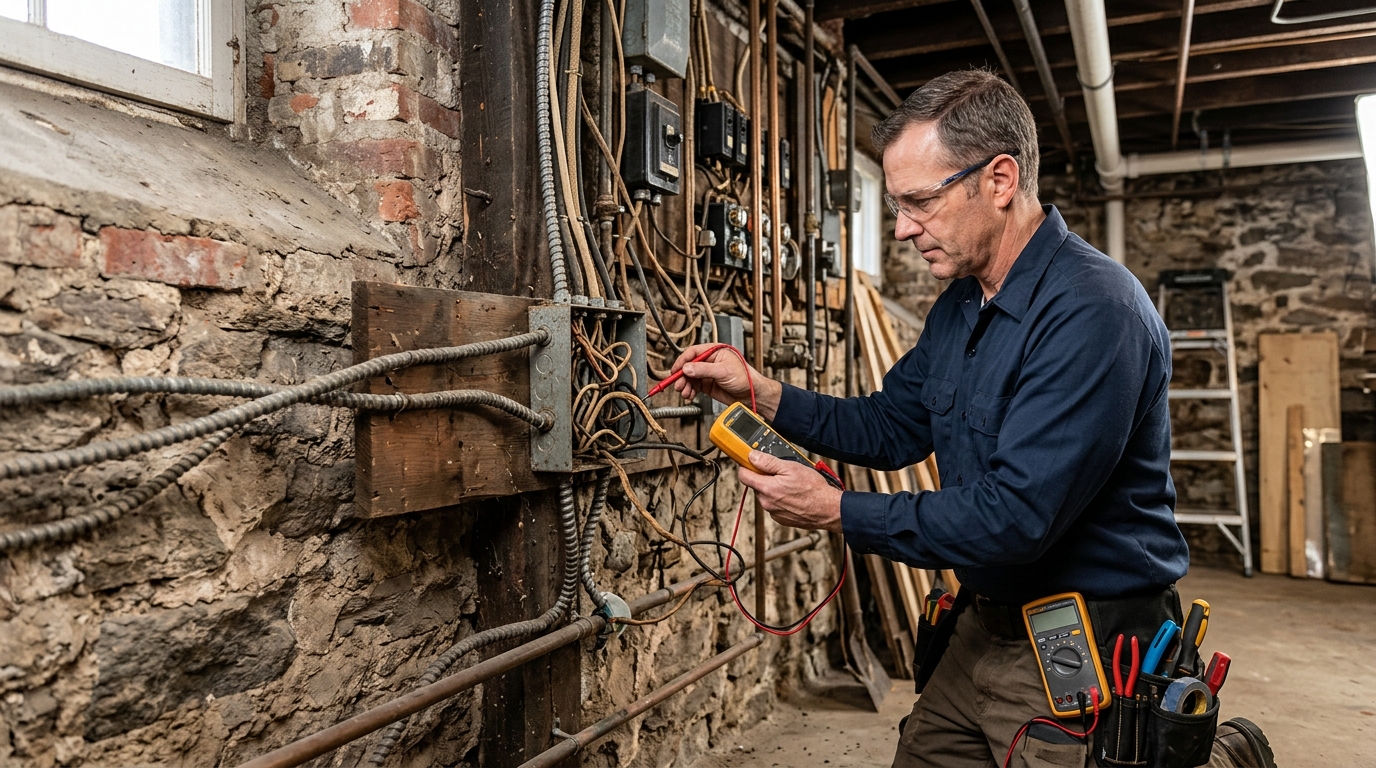
    A significant proportion of Wiltshire’s rental stock consists of period and heritage properties — buildings constructed well before modern wiring standards existed. These properties present unique challenges for EICR inspections and, where remedial work is needed, for the subsequent repair or rewiring works.

    Key considerations for landlords with older properties include:

    • Fabric sensitivity — running new cables through solid stone or brick walls requires specialist techniques to avoid damage to historic materials
    • Insurer requirements — heritage properties, particularly thatched properties, often have specific electrical compliance requirements set by their insurers that go beyond the legal minimum
    • Legacy wiring — rubber-insulated wiring, aluminium wiring, or older wiring systems may be present and will almost certainly generate C1 or C2 codes during an EICR
    • Consumer unit location — older properties may have the consumer unit in a non-standard location, which can affect the scope and cost of upgrades

    Our electrical safety guidance for heritage and thatched properties covers the specific requirements for these property types in detail.

    Conclusion

    This ultimate guide to landlord electrical safety certificates in 2026 has covered every aspect of what you need to know — from the legal framework and inspection process, to understanding your EICR report, managing remedial works, and choosing the right qualified electrician.

    The bottom line is straightforward: holding a valid landlord electrical safety certificate is not optional, it is a legal requirement that protects your tenants, your investment, and your legal right to manage your property. With 2026 being the peak renewal year for certificates issued under the 2021 regulations, acting promptly is more important than ever.

    We recommend every landlord checks their current EICR expiry date today and books their next inspection well in advance of the deadline. If your property needs remedial works or a full rewire to achieve a satisfactory certificate, our team is ready to help — get in touch for a no-obligation quote and we will take care of the entire process from inspection through to certified completion.


    Frequently Asked Questions

    Is a landlord electrical safety certificate the same as an EICR in 2026?

    Yes — the landlord electrical safety certificate is the document produced as the outcome of an Electrical Installation Condition Report (EICR). When the inspection returns a Satisfactory result, that EICR report serves as your formal electrical safety certificate for the rental property.

    What happens if I don’t have an electrical safety certificate for my rental property in 2026?

    Without a valid landlord electrical safety certificate, you face fines of up to £40,000, you cannot legally serve a Section 21 eviction notice, and your landlord insurance may be invalidated in the event of a claim. Local authorities also have the power to carry out remedial works themselves and charge the costs back to you.

    How long does it take to get a landlord electrical safety certificate?

    The inspection itself typically takes 3 to 5 hours for a standard 3-bedroom property, and the EICR report is usually issued within a few days of the visit. If remedial works are required, you have 28 days to complete them before the certificate can be formally issued as Satisfactory.

    Can a tenant refuse access for an EICR inspection?

    A landlord must provide at least 24 hours’ written notice and make every reasonable effort to arrange the inspection at a mutually convenient time. If a tenant unreasonably refuses access after multiple attempts, landlords should document each attempt carefully — this evidence can be used to demonstrate compliance efforts to the local authority.

    Is an EICR worth getting even if it is not yet due?

    Yes, particularly in 2026. With unprecedented demand for inspections, booking ahead of your legal deadline avoids the risk of contractor shortages and potential periods of non-compliance. For older properties, an early inspection can also identify issues before they become costly emergencies.

    What is the most common reason a rental property fails an EICR in 2026?

    The two most common failure points are missing RCD protection in the consumer unit (a C2 code requiring an urgent upgrade) and incorrectly specified light fittings in bathrooms. Addressing these before your inspection can save both time and the cost of a re-inspection visit.

    Do I need a separate electrical safety certificate for each rental property I own?

    Yes — each individual rental property requires its own separate EICR and landlord electrical safety certificate. There is no group or portfolio certificate option. Each property’s electrical installation is assessed independently, and each requires its own documentation to be shared with the tenants of that specific property.

  • How to Pass Your Residential EICR Inspection Successfully: The Complete Homeowner’s Guide for 2026

    How to Pass Your Residential EICR Inspection Successfully: The Complete Homeowner’s Guide for 2026

    Knowing how to pass your residential EICR inspection successfully can be the difference between a smooth, stress-free certificate and a costly cycle of re-inspections and emergency repairs. Faulty electrical installations are responsible for approximately 21% of accidental house fires in England, which means this inspection isn’t just a paperwork exercise — it genuinely protects your home, your family, and your finances.

    Blog illustration

    Key Takeaways

    Question Quick Answer
    What is an EICR? An Electrical Installation Condition Report is a detailed inspection of your home’s wiring, consumer unit, and circuits carried out by a qualified electrician.
    How often do I need one? For owner-occupied homes, every 10 years is the recommended interval. Rental properties require one every 5 years by law.
    What causes most EICR failures? Lack of RCD (Residual Current Device) protection and outdated consumer units are the two leading causes of an Unsatisfactory result.
    Who should carry out the inspection? Only a NICEIC registered contractor or similarly accredited professional should conduct your EICR to ensure the certificate is valid and recognised.
    How much does an EICR cost in 2026? Typically between £100 and £350 for a domestic property, depending on size and circuit complexity.
    What happens if I fail? You’ll receive a list of coded observations requiring remedial work. Once the work is completed, a re-inspection confirms a Satisfactory outcome.
    Can I prepare my home beforehand? Yes. A pre-inspection checklist covering your fuse board, sockets, switches, and earthing arrangements can significantly improve your chances of a first-time pass.

    What Is a Residential EICR and Why Does It Matter?

    An EICR, or Electrical Installation Condition Report, is a thorough assessment of all the fixed electrical wiring and equipment within your home. The inspector checks everything from your consumer unit and circuit breakers to your sockets, light fittings, and earthing system.

    The result comes back as either Satisfactory (you’re good to go) or Unsatisfactory (remedial work is required). Any issues found are coded — C1 for immediate danger, C2 for potentially dangerous, and C3 for improvement recommended — so you know exactly what needs attention and how urgently.

    It isn’t just a safety document, either. Insurance providers are increasingly reviewing EICR records when calculating your home insurance premium, and mortgage lenders sometimes request a valid report as part of the conveyancing process. Getting it right the first time matters more than ever in 2026.

    Blog illustration

    How to Pass Your Residential EICR Inspection: The Pre-Inspection Preparation Checklist

    Most homeowners don’t realise that a little preparation before the inspection day can make a real difference to the outcome. We always advise clients to run through a simple checklist in the weeks leading up to their booked appointment.

    • Test your smoke and carbon monoxide alarms and replace any expired batteries.
    • Inspect all visible sockets and switches for signs of scorch marks, cracks, or discolouration.
    • Check your consumer unit (fuse board) — is it a modern, clearly labelled unit with RCD protection?
    • Remove any DIY electrical work that was not carried out or certified by a qualified electrician.
    • Ensure all light fittings have bulbs fitted so the inspector can test each circuit properly.
    • Provide clear access to your consumer unit, loft hatch, and under-floor areas where cabling runs.
    • Gather any existing electrical certificates — previous EICRs, Part P notifications, or installation certificates help the inspector understand the history of your system.

    Think of it like preparing for an MOT — you wouldn’t turn up without checking the obvious things first. A little attention beforehand can save you both time and money.


    Infographic shows a 5-step process to pass a residential EICR inspection with tips and a checklist.

    This visual guide breaks down the five essential steps to passing a residential EICR inspection. Use the checklist to prepare and avoid common pitfalls.

    The Most Common Reasons Homes Fail an EICR Inspection

    Understanding what fails an inspection is one of the most practical ways to approach how to pass your residential EICR inspection successfully. Some issues are simple and inexpensive to resolve; others require more involved electrical work.

    Here are the most frequently cited reasons for an Unsatisfactory result:

    1. No RCD protection on socket circuits or circuits supplying outdoor equipment
    2. Outdated consumer unit — old fuse boards with rewirable fuses rather than modern circuit breakers
    3. Missing or inadequate earthing and bonding connections at gas and water pipes
    4. Damaged or deteriorating cables, particularly in older properties with rubber-insulated wiring
    5. Reverse polarity at socket outlets, meaning live and neutral wires are incorrectly connected
    6. Lack of protective enclosures on junction boxes in lofts or under-floor spaces
    7. Non-compliant DIY additions, including sockets or lighting added without proper certification
    8. Counterfeit or substandard electrical accessories, which are increasingly common with online purchasing

    “Most people don’t realise that their electrics are outdated — and in some cases, addressing these issues can be genuinely life-saving.”

    Blog illustration

    RCD Protection: The Single Most Important Factor in Passing Your EICR

    If we had to point to the one thing most likely to cause a residential EICR to come back Unsatisfactory, it’s the absence of proper RCD protection. A Residual Current Device monitors the flow of electricity through a circuit and cuts the power within milliseconds if it detects a dangerous imbalance — protecting you from electric shock and reducing the risk of fire.

    Homes built before the mid-2000s frequently lack RCD protection on socket circuits, outdoor supplies, and bathroom circuits. If your consumer unit doesn’t have an RCD (or uses a split-load board with only partial RCD coverage), upgrading it is often the single most effective step you can take before your inspection.

    Did You Know?

    Lack of RCD (Residual Current Device) protection is cited as the single most common reason for a failed (Unsatisfactory) EICR result.
    Source: fixflo.com

    The good news is that fitting a modern consumer unit with full RCD protection is a straightforward, well-defined piece of work for a qualified electrician. It doesn’t necessarily mean rewiring your entire property — in many cases, it’s a targeted upgrade that resolves the majority of C1 and C2 observations in one visit.

    How to Pass Your Residential EICR Inspection by Upgrading Your Consumer Unit

    A consumer unit replacement is the most frequent remedial solution that turns an Unsatisfactory EICR result into a Satisfactory one. If your property still has an old fuse board with ceramic or rewirable fuses, upgrading to a modern unit with RCBOs (combined RCD and circuit breaker devices) will address multiple inspection failures at once.

    Here’s what a modern consumer unit upgrade typically includes:

    • Full RCD or RCBO protection on all circuits
    • Clearly labelled circuit breakers for each zone of the property
    • A metal enclosure in compliance with current fire-safety regulations
    • Proper main switch isolation
    • An updated Electrical Installation Certificate for the work carried out

    We always recommend getting this work done before your EICR if your current fuse board is visibly old or non-compliant. It’s far more cost-effective than paying for an inspection, receiving an Unsatisfactory result, completing the upgrade, and then paying for a re-inspection on top.

    How to Choose the Right Electrician to Carry Out Your EICR

    Not all electricians are authorised to issue a legally recognised EICR. The inspection must be carried out by a qualified, registered professional — and the easiest way to confirm this is to look for NICEIC registration or membership of an equivalent approved body.

    We are NICEIC registered contractors, which means all of our work is certified and independently audited to the highest industry standards. That matters when you’re relying on a piece of documentation to satisfy an insurer, a letting agent, or a mortgage lender.

    When vetting any electrician for your EICR, check these points:

    • Are they on the NICEIC, NAPIT, or ELECSA register? (Always verify directly on the scheme’s website.)
    • Do they carry professional indemnity and public liability insurance?
    • Can they show you examples of completed EICR certificates they have issued?
    • Are they local and familiar with the types of property in your area, including older or period buildings?

    It’s also worth noting that 36% of homeowners rely on personal recommendations when choosing an electrician for safety inspections — and that’s a solid starting point, as long as you still verify their credentials independently.

    Blog illustration

    What Happens on the Day of Your EICR Inspection?

    Knowing what to expect on inspection day removes a lot of the anxiety around the process. A residential EICR typically takes between 3 and 4 hours for a standard three-bedroom property, though larger homes or those with complex wiring may take longer.

    The electrician will work through the following stages:

    1. Visual inspection of all accessible wiring, sockets, switches, and the consumer unit
    2. Dead testing — checking the resistance, insulation, and continuity of circuits with the power off
    3. Live testing — verifying the operation of circuit breakers, RCDs, and polarity with the power on
    4. Recording observations — documenting any deficiencies with the appropriate C1, C2, or C3 code
    5. Issuing the report — either on the day or shortly after, with a full schedule of circuits and findings

    During dead testing, the power to individual circuits will be interrupted temporarily. Let other members of the household know in advance so no one is caught off guard by lights or appliances switching off unexpectedly.

    How to Pass Your Residential EICR Inspection: Understanding Your Results

    Receiving your EICR report and knowing how to read it confidently is a key part of the process. The report contains a schedule of circuits, a schedule of test results, and a section listing all observations found during the inspection.

    Here’s a breakdown of what the observation codes mean:

    Code Meaning Action Required
    C1 Danger present — risk of injury Immediate remedial action required
    C2 Potentially dangerous Urgent remedial action required
    C3 Improvement recommended Not mandatory but advisable
    FI Further investigation required Inspector could not fully assess — investigation needed

    Any C1 or C2 observation results in an overall Unsatisfactory rating. C3 observations alone do not cause a failure — the report can still come back Satisfactory even with C3 items present.

    Blog illustration

    Remedial Work: What to Do After an Unsatisfactory EICR

    Receiving an Unsatisfactory report isn’t the end of the world — it’s a clear, actionable list of what needs fixing. In 2026, around 40% of EICR inspections identify safety issues requiring remedial work before a Satisfactory rating can be issued, so you are far from alone if this happens.

    For landlords, the legal requirement is to complete all remedial work within 28 days of the inspection (or sooner if a C1 issue requires immediate action). For homeowners, there is no statutory deadline, but acting promptly is strongly advisable.

    Once the remedial work is completed by a qualified electrician, they will issue an Electrical Installation Certificate for the work done. You can then request a re-inspection to obtain your Satisfactory EICR, or in straightforward cases, the electrician who carried out the remedial work can sign off the specific observations that have been resolved.

    Did You Know?

    Consumer unit (fuse board) upgrades are the most frequent remedial solution required to turn an ‘Unsatisfactory’ EICR report into a ‘Satisfactory’ one.

    The Cost of an EICR in 2026 and How to Budget Wisely

    The average cost for a domestic EICR in 2026 ranges between £100 and £350, depending on the size of your property and the number of circuits involved. A small flat with a handful of circuits will sit at the lower end; a large detached house with multiple outbuildings and extensive circuits will be toward the higher end.

    Be cautious of quotes that seem unusually low. A thorough EICR is a detailed, time-intensive process — an inspector rushing through your home in under an hour is unlikely to identify all the issues that a careful, methodical inspection would catch. A cheap inspection that misses a C1 fault doesn’t save you money; it puts your home at risk.

    Here’s how to budget sensibly for the full process:

    • EICR inspection fee: £100 to £350 depending on property size
    • Consumer unit upgrade (if needed): typically £400 to £900 fitted
    • Additional bonding and earthing work: usually £80 to £200
    • Socket or switch replacements: generally £30 to £80 per item
    • Re-inspection fee (if required): often reduced or included by the same contractor

    Also worth noting: insurers may increase property premiums by 50% to 100% if a property lacks evidence of a satisfactory electrical check every five years. Factor that into the total value of getting the inspection done promptly — it’s an investment, not just a cost.

    Blog illustration

    EICR Requirements for Landlords and Homeowners in 2026

    The regulatory landscape for EICRs in 2026 is clear for rental properties and increasingly important for owner-occupiers too. If you’re a landlord in England, you are legally required to hold a valid EICR carried out every five years, with a copy provided to your tenants and local authority on request.

    For owner-occupiers, there is no current legal obligation to hold an EICR, but it is strongly recommended every 10 years (or when buying or selling a property). With homeowners, landlords, and builders all facing increased scrutiny from insurers and mortgage lenders, having an up-to-date report is fast becoming standard practice rather than an optional extra.

    In 2026, civil penalties for serious breaches of electrical safety regulations can reach up to £40,000. For landlords who ignore or delay remedial work identified in a report, the financial and legal exposure is simply not worth the risk.

    Conclusion: How to Pass Your Residential EICR Inspection Successfully, First Time

    Passing your residential EICR inspection successfully comes down to three core principles: preparation, using the right professional, and acting quickly on any findings. Run through the pre-inspection checklist, ensure your consumer unit offers full RCD protection, and book your inspection with a NICEIC registered electrician who will give you a thorough, honest report.

    If you do receive an Unsatisfactory result, don’t panic. In most cases, targeted remedial work — often a consumer unit upgrade or the addition of RCD protection — is all that’s needed to bring your home’s electrics up to standard and secure that Satisfactory certificate.

    We work with homeowners, landlords, and property professionals across Wiltshire, providing detailed EICR inspections and all associated remedial work. All our inspections are carried out by NICEIC registered electricians, and all our work is certified. If you’d like a straightforward conversation about your electrical installation — no jargon, no pressure — get in touch with us today and we’ll be happy to help.

  • Different Electrical Certificates

    Different Electrical Certificates

    When you consider the various electrical certificates available, it's important to understand their specific purposes and implications for safety and compliance. The Electrical Installation Certificate (EIC) is essential for new installations, while the Minor Works Certificate applies to smaller modifications. Additionally, the Electrical Safety Certificate and Periodic Inspection Report play significant roles in ongoing maintenance and verification. Each certificate serves a distinct function in ensuring electrical systems operate safely. However, maneuvering through these requirements can be complex, and understanding the nuances may lead to important revelations about your property's safety standards.

    Electrical Installation Certificate (EIC)

    The Electrical Installation Certificate (EIC) is an important document that confirms the safety and compliance of newly installed electrical systems. When you have a new electrical installation, obtaining an electrical installation certificate is necessary to confirm that the work meets UK regulations. This certificate not only verifies that the installation adheres to the necessary safety standards but also provides peace of mind for you, the homeowner.

    If you're undertaking a domestic project, you'll likely require a domestic electrical installation certificate. This specific certificate addresses installations within residential properties, ensuring that your home's electrical systems are safe and compliant. Once the installation is complete, it's crucial to conduct regular inspections, for which an EICR certificate near me can provide valuable assistance, ensuring that your electrical systems remain safe over time.

    In the UK, the electrical installation certificate serves as proof of compliance with electrical safety regulations. It's important to keep this document on hand, as it may be requested during property transactions or inspections. By obtaining an electrical compliance certificate, you're not only safeguarding your property but also ensuring a safe environment for all occupants.

    Minor Works Certificate

    When you're making minor changes to an existing electrical installation, obtaining a Minor Works Certificate is necessary. This certificate serves as proof that the work you've completed complies with the relevant safety standards and regulations. Typically, minor works might include tasks such as adding a socket outlet, installing a new light fitting, or altering existing circuits.

    To obtain this certificate, you need to guarantee that the changes don't compromise the overall safety of the installation. It's important that you follow the necessary guidelines and standards outlined in the IET Wiring Regulations (BS 7671). After completing the work, you should fill out the Minor Works Certificate form, detailing the nature of the work and confirming that it adheres to safety requirements.

    It's significant to remember that while a Minor Works Certificate is simpler than an Electrical Installation Certificate (EIC), it still requires a competent person to carry out the work. This ensures that the modifications are safe and compliant. Keeping this documentation on file is essential, as it may be required for future inspections or when selling the property.

    Electrical Safety Certificate

    An Electrical Safety Certificate (ESC) is essential for verifying that your electrical installations are safe and compliant with current regulations. This certificate confirms that your electrical systems are correctly installed, maintained, and meet the required safety standards. Obtaining an ESC involves a thorough inspection by a qualified electrician, who evaluates the safety and functionality of your electrical installations.

    You should prioritize acquiring an ESC, particularly when you buy or sell a property. It safeguards you against potential hazards, such as electrical shocks or fires, which might arise from faulty wiring or outdated systems. Additionally, having an ESC can be beneficial when dealing with insurance claims, as it demonstrates your commitment to safety and compliance.

    It's important to note that an ESC isn't a one-time requirement. Regular inspections and updates to your electrical systems can help maintain safety and ensure continued compliance with regulations. It's important to schedule periodic assessments with a qualified electrician to keep your certificate up to date.

    Periodic Inspection Report

    Conducting regular assessments of your electrical installations leads to the issuance of a Periodic Inspection Report (PIR), which is important for ensuring ongoing safety and compliance. This document details the condition of your electrical systems, identifying any potential hazards or non-compliance with safety standards.

    The PIR is typically carried out every five years or when there's a change in occupancy or significant alterations to the electrical installations. During the examination, qualified electricians assess various elements, such as wiring integrity, earthing and bonding, and the functionality of electrical appliances.

    You'll find that the PIR serves multiple purposes. To start with, it provides assurance that your electrical systems are safe to use.

    Secondly, it can help in identifying necessary repairs or upgrades, which can prevent more significant issues in the future.

    Lastly, a valid PIR is often required for insurance purposes, ensuring that you're covered in case of electrical-related incidents.

    Once the evaluation is complete, the inspector will provide a detailed report outlining any observed issues, recommendations for remedial actions, and a scheduled timeline for follow-up inspections. Keeping your PIR up to date is important for maintaining safety and compliance in your electrical installations.

    Certificate of Compliance

    Following the completion of a Periodic Inspection Report (PIR), obtaining a Certificate of Compliance becomes an important next step. This certificate confirms that your electrical installation adheres to relevant safety standards and regulations. It serves as proof that the electrical work has been inspected and deemed safe for use.

    To acquire this certificate, you must make sure that all electrical installations meet the requirements outlined in the PIR. This includes verifying that all electrical components function correctly and are installed according to the latest regulations. You'll typically need to engage a qualified electrician or electrical contractor to conduct this evaluation.

    Once the inspection is complete, the professional will issue the Certificate of Compliance if everything is satisfactory. This document is crucial for both legal compliance and safety assurance.

    In many cases, it may be necessary for insurance purposes or when selling a property.

    Conclusion

    To sum up, grasping the different electrical certificates is crucial for guaranteeing safety and compliance in your electrical installations. Each certificate serves a specific role, from the Electrical Installation Certificate for new systems to the Certificate of Compliance for overall adherence to safety standards. By prioritizing regular inspections and proper documentation, you not only safeguard your property but also enhance its value. Stay informed and proactive in maintaining these certifications to secure a safe environment for you and your family.