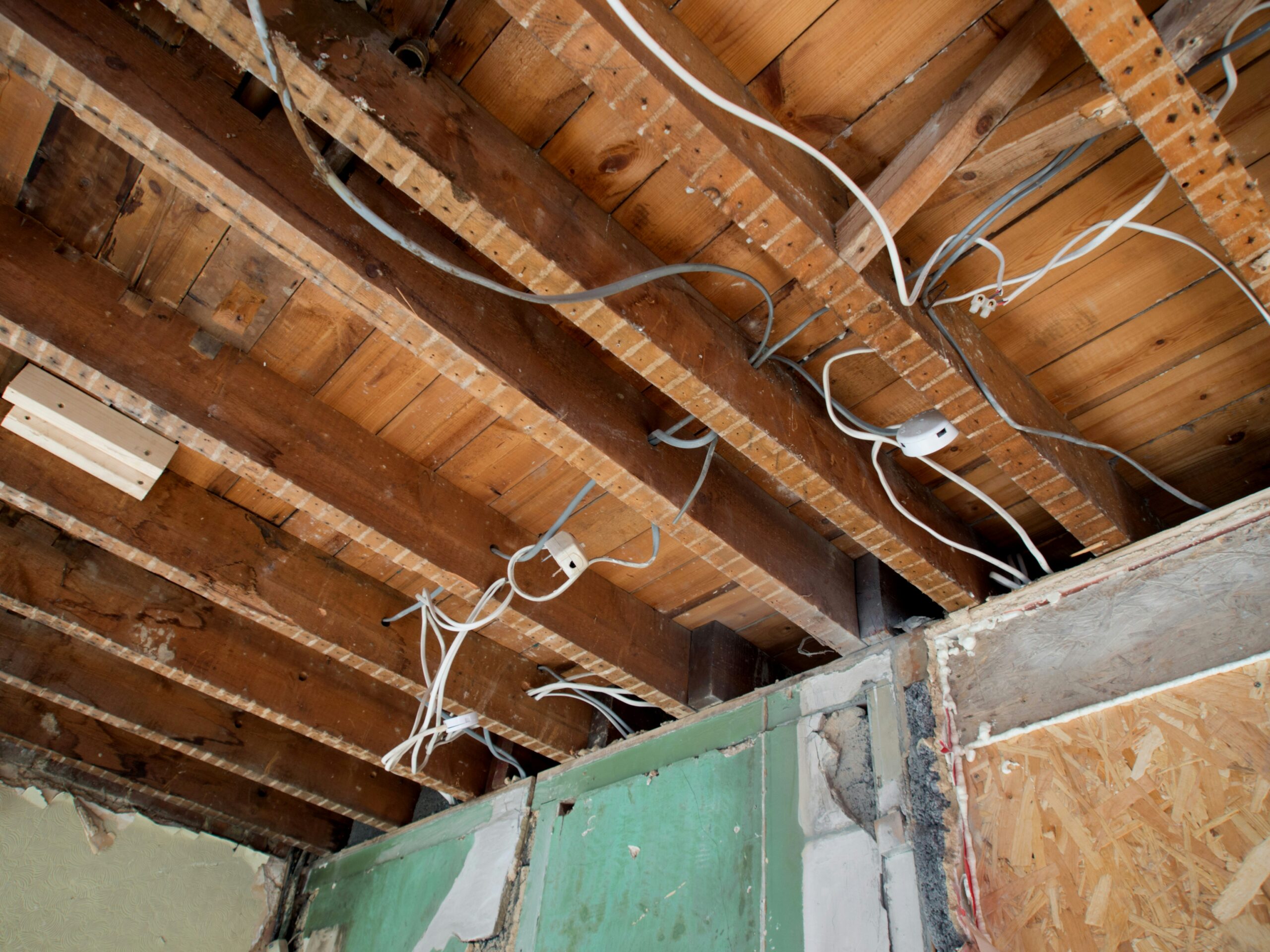

• Reliable Electrical Solutions for Thatched Roof and Heritage Homes: Your Complete 2026 Guide

    Reliable Electrical Solutions for Thatched Roof and Heritage Homes: Your Complete 2026 Guide

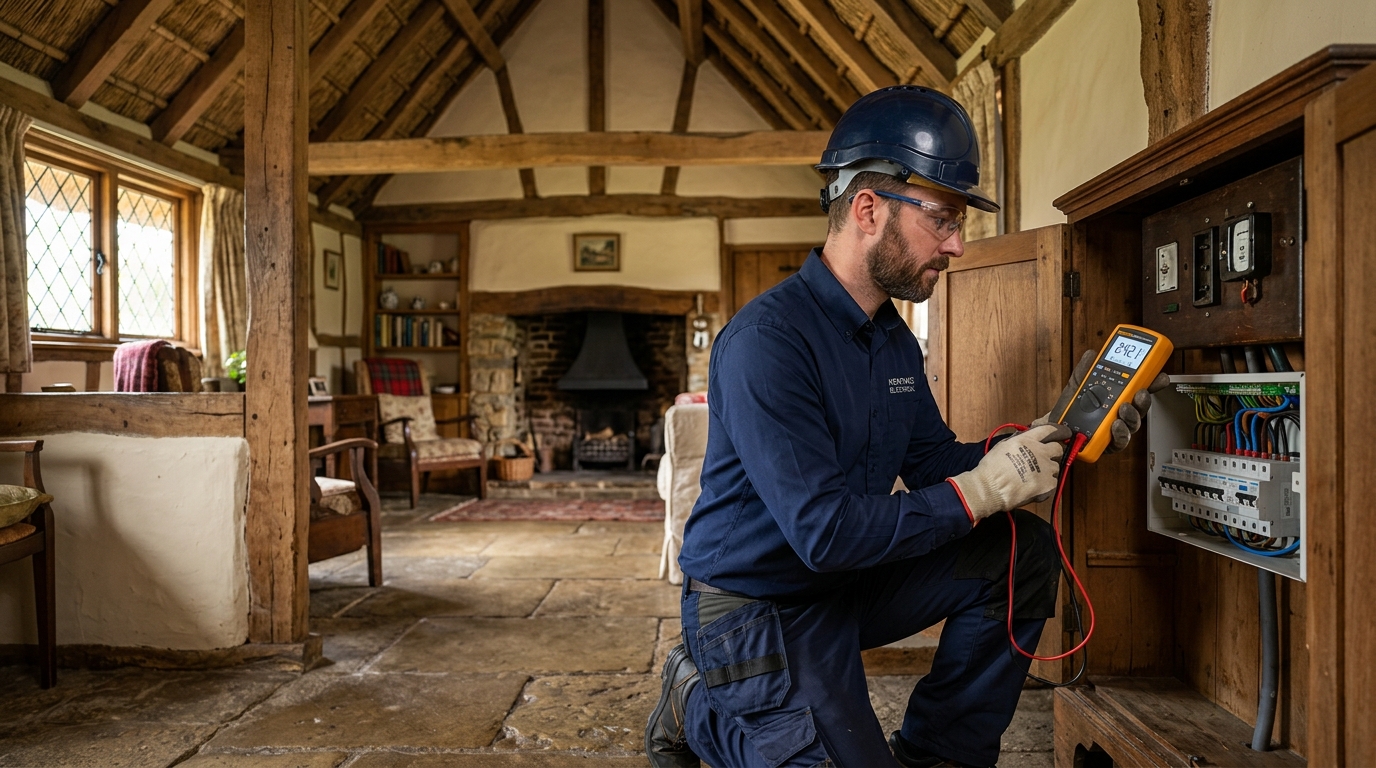
    When it comes to reliable electrical solutions for thatched roof and heritage homes, the stakes could not be higher. Electrical faults are the second largest cause of fires in thatched homes, a sobering fact that makes choosing the right specialist electrician one of the most important decisions you will make as a heritage homeowner.

    Blog illustration

    Key Takeaways

    Question Answer
    Do thatched homes need a specialist electrician? Yes. Thatched and heritage properties require electricians experienced in working with delicate, older building materials and meeting specific insurer requirements.
    What is an EICR and do I need one? An Electrical Installation Condition Report is a detailed inspection of your home’s wiring and electrics. Most specialist insurers require one for thatched properties. Learn more about electrical safety inspections.
    How often should a thatched home’s electrics be inspected? Many specialist insurers require an EICR every five years for thatched properties, compared to ten years for standard residential homes.
    Is rewiring a heritage home more complex than a standard property? Absolutely. Lath and plaster walls, original joinery, and period features all require careful, skilled handling. Heritage rewiring costs typically run 20-30% higher due to accessibility and repair complexities.
    How do I know if my heritage home’s wiring is outdated? Signs include rubber-sheathed cables, round-pin sockets, old-style fuse boxes, or wiring that has not been updated in over 25 years. A professional electrical review is the safest way to find out.
    What certifications should a heritage electrician hold? Look for NICEIC registration as a minimum. This means all work is certified and meets current electrical standards.
    Can I get emergency electrical help for my thatched property? Yes. A good specialist contractor will offer fast emergency callouts, getting to you quickly when faults arise in your heritage home.

    Why Thatched Roof and Heritage Homes Need Specialist Electrical Work

    Not all properties are created equal, and heritage homes are a world apart from modern builds. Thatched roofs, timber frames, lath and plaster walls, and centuries-old joinery all present challenges that a standard electrician simply is not equipped to handle safely or sympathetically.

    These properties give Wiltshire and the surrounding counties their character and charm, and we genuinely love working in them. But they also demand a very different approach to electrical work, one that balances safety with sensitivity to the original fabric of the building.

    Modern electrical demands have also increased significantly. Heritage homes were built long before high-load appliances, home office setups, and smart technology became everyday staples. Bringing these properties up to current standards without damaging their historic character is exactly what we specialise in.

    Blog illustration

    The Unique Challenges of Heritage Property Electrical Installations

    Working in a heritage or thatched property is genuinely different from working in a new build or standard residential home. The materials, the layouts, and the hidden surprises all add layers of complexity that the less experienced simply are not prepared for.

    Lath and plaster walls and ceilings, for example, can crack and crumble if handled roughly, damaging irreplaceable period features. Routing new cables through original timber frames requires patience, precision, and a real understanding of how these buildings are constructed.

    Older wiring types, including rubber-sheathed cables and early PVC wiring, can become brittle and dangerous over time. In a thatched home, where the roof itself is a combustible material, this risk is amplified enormously.

    Did You Know?

    Most specialist insurers require an Electrical Installation Condition Report (EICR) every 5 years for thatched properties, compared to 10 years for standard homes.

    Reliable Electrical Solutions for Thatched Roof and Heritage Homes: Rewiring Done Right

    Rewiring is one of the most significant electrical projects a heritage homeowner will undertake, and getting it right matters enormously. We specialise in expert rewiring without the hassle, working carefully around your home’s original features to protect what makes it special.

    Our approach begins with a thorough assessment of your existing wiring. We map out what is there, what condition it is in, and what needs to be replaced or upgraded before a single cable is touched.

    In thatched and heritage properties, this planning stage is even more critical. We identify the most sympathetic routes for new cabling, minimising the need for unnecessary cutting or chasing, and ensuring that wall repairs and finishes are handled with the care these buildings deserve.

    The end result is a home that meets current safety standards and is ready for modern electrical demands, all without compromising its historic character. If you are concerned about your wiring or thinking about an upgrade, our thatched and heritage electrical services are designed with exactly this in mind.


    Reliable Electrical Solutions for Thatched Roof and Heritage Homes: three key benefits - safety, compatibility, energy efficiency.

    Three essential benefits of reliable electrical solutions for thatched roofs and heritage homes. This infographic highlights safety, compatibility, and energy efficiency.

    Blog illustration

    Electrical Certificates and EICRs: Compliance for Heritage Properties

    We are NICEIC registered contractors, which means every piece of work we carry out is fully certified. This is not just a box-ticking exercise; it is the foundation of everything we do.

    For thatched and heritage homeowners, certification is particularly important because your insurer will almost certainly ask for it. An Electrical Installation Condition Report (EICR) is a detailed inspection of your entire electrical installation, identifying any defects, damage, or areas that fall below current standards.

    Without a current, valid EICR from a registered contractor, you may find that your heritage home insurance is invalid or that you are paying significantly more than necessary. We issue all certificates promptly and make sure you understand exactly what the report says and what, if anything, needs to be addressed.

    Most people do not realise that their electrics are outdated until an inspection reveals the reality. For thatched roof homeowners in particular, an up-to-date EICR is not optional; it is essential. You can find out more about what an inspection covers by visiting our safety inspections page.

    Emergency Electrical Callouts for Heritage and Thatched Buildings

    Electrical faults do not wait for a convenient time to appear, and in a thatched property, a fault that might be a minor inconvenience in another home can become a serious risk very quickly. That is why we offer emergency callouts across Wiltshire and the surrounding areas.

    Like superheroes, but for electrical services, we will get to you as fast as we can to try to save the day. One of our customers put it perfectly: “Had an electrical fault, called this local number and was sorted within 2 hours.” That is exactly the kind of response a thatched or heritage homeowner needs.

    When you call us out to a heritage property in an emergency, we bring the same level of care and expertise as any planned job. We understand that your home is irreplaceable, and we treat it that way, even under pressure and time constraints.

    Blog illustration

    Reliable Electrical Solutions for Thatched Roof and Heritage Homes: Choosing the Right Electrician

    Not every electrician is suited to work in a thatched or heritage property. The skills, patience, and specific knowledge required go well beyond standard domestic electrical work, and choosing the wrong contractor can cause as many problems as it solves.

    Here is what to look for when selecting a specialist for your heritage home:

    • NICEIC registration so all work is fully certified and meets current standards
    • Demonstrable experience in heritage and thatched properties specifically, not just older buildings in general
    • Understanding of period materials such as lath and plaster, timber frames, and original joinery
    • Familiarity with insurer requirements for thatched roofs, including EICR schedules and certification
    • A careful, measured approach to cable routing and wall repairs that preserves original features
    • Clear, transparent communication throughout the job, including written quotes and post-work certificates
    • Local knowledge of the specific property types in your area

    We have been working across Wiltshire for over five years, and heritage properties make up a significant part of what we do. We are no stranger to the intricacies of working in buildings that require a lighter touch and a more experienced hand.

    Did You Know?

    Insurance premiums for homes with active knob-and-tube wiring can be 2-3 times higher than standard policies.

    Old Wiring: The Hidden Danger in Your Heritage Home

    Around 7,000 house fires in the UK are caused annually by faulty electrics, wiring, and overloaded sockets. In a thatched property, where the roof can be highly combustible, this risk is one that simply cannot be ignored.

    Many heritage homeowners are living with wiring that was installed decades ago and was never designed to handle the electrical load of modern life. A single kettle, a laptop charger, and a smart TV can push ageing wiring well beyond its safe capacity.

    Older wiring systems degrade invisibly. Insulation becomes brittle, connections loosen, and earthing fails, all without any obvious sign from the outside. By the time a fault becomes visible, significant damage may already have been done inside walls and ceiling voids.

    This is why a proactive approach to electrical maintenance is so important for heritage homeowners. Most people do not realise that their electrics are outdated, but acting before a problem develops can genuinely be life-saving. If your home has never had a full electrical inspection, or if it has been more than five years since the last one, now is the time to book one.

    Blog illustration

    How Reliable Electrical Solutions for Thatched Roof and Heritage Homes Affect Your Insurance

    Heritage home insurance, and thatched roof insurance in particular, comes with specific requirements around electrical safety. Insurers know the risk profile of these properties and they expect you to manage it actively.

    A valid, up-to-date EICR from an NICEIC registered contractor is frequently a condition of cover, not just a recommendation. Failing to have one in place could mean your insurer refuses to pay out in the event of a claim, even if the electrical fault was unrelated to the fire or damage.

    Upgrading old wiring also has a direct effect on your premium. Homes with modern, certified electrical installations are lower risk, and many insurers reflect this in what they charge. The cost of a rewire or inspection quickly becomes a financially sound decision when measured against years of reduced premiums.

    For heritage homeowners who want to understand their specific obligations, we are always happy to talk through what your insurer requires and how we can help you meet those requirements. Reliable electrical solutions for thatched roof and heritage homes are not just about safety; they are about protecting your investment and keeping your cover valid. You can see the full range of what we offer on our services page.

    Bespoke Electrical Solutions for Modern Heritage Living

    Living in a heritage or thatched home does not mean you have to compromise on modern comfort or technology. In 2026, heritage homeowners are increasingly looking at smart heating controls, EV charging points, solar integration, and energy monitoring systems, and all of these can be installed sympathetically within a period property.

    It takes experience and forward-thinking to provide bespoke electrical solutions suited to modern living in a charming old property. This is not something you want handled by an electrician who has never worked in a building with three-foot-thick stone walls or a Tudor beam structure.

    We work closely with our clients to understand what they need from their home and then design an electrical solution that delivers exactly that, without compromising the integrity or appearance of the original building. From discreetly routed cabling to carefully positioned consumer units, every decision is made with both function and preservation in mind.

    Smart thermostats, for instance, can help offset the higher heating costs that often come with older, less well-insulated heritage homes. Adding this kind of technology requires careful electrical planning, particularly in properties with older wiring that may not be compatible straight away. We handle all of that, from the initial assessment right through to final installation and certification.

    If you are curious about what a bespoke electrical upgrade could look like for your specific property, we would love to hear from you. Visit our About Us page to learn more about the team behind the work, and then get in touch to talk through your project.

    Blog illustration

    What Our Clients Say: Heritage Electrical Work Across Wiltshire

    We have been working across Wiltshire and the surrounding areas for over five years, building a reputation for careful, skilled electrical work in some of the county’s most beautiful and challenging properties. Our clients include homeowners of thatched cottages, listed buildings, period farmhouses, and stone-built manor homes.

    The feedback we receive most consistently is that we are thorough, tidy, and genuinely careful with the properties we work in. For heritage homeowners who have had bad experiences with contractors who treat their 400-year-old cottage like a standard new build, that difference matters.

    We are happy to help with any needs, whether that is a full rewire, a single inspection, an emergency callout, or advice about what your insurer requires. Every enquiry gets the same level of attention and the same commitment to getting it right.

    “Had an electrical fault, called this local number and was sorted within 2 hours.”
    Greener Electrical Customer, Wiltshire

    If you are looking for a local electrician in the Wiltshire area who understands the specific demands of heritage and thatched properties, we would love to talk. Get a free, no-strings-attached quote by visiting our contact page today.

    Conclusion

    Reliable electrical solutions for thatched roof and heritage homes are not a luxury; they are an absolute necessity. The combination of combustible materials, ageing wiring, modern electrical demands, and strict insurer requirements makes specialist electrical work one of the most important investments you can make in your heritage property.

    From full rewires and EICR inspections to emergency callouts and bespoke smart home installations, we provide the complete range of electrical services that thatched and heritage homeowners need, delivered by experienced, NICEIC registered professionals who genuinely understand these buildings.

    We have spent over five years building our expertise in the older buildings that give Wiltshire its character and charm. If your property has not had a professional electrical inspection recently, or if you are planning any electrical work, we are here to help. Reliable electrical solutions for thatched roof and heritage homes start with a conversation, and we are always happy to have one.

    Visit our homepage to find out more about Greener Electrical, or head straight to our clients page to see more about the range of properties and people we work with across Wiltshire. Your heritage home deserves the care and expertise it was built with, and that is exactly what we bring to every job.

  • Top Methods for Concealing Modern Wiring in Character Properties (Without Losing the Period Feel)

    Top Methods for Concealing Modern Wiring in Character Properties (Without Losing the Period Feel)

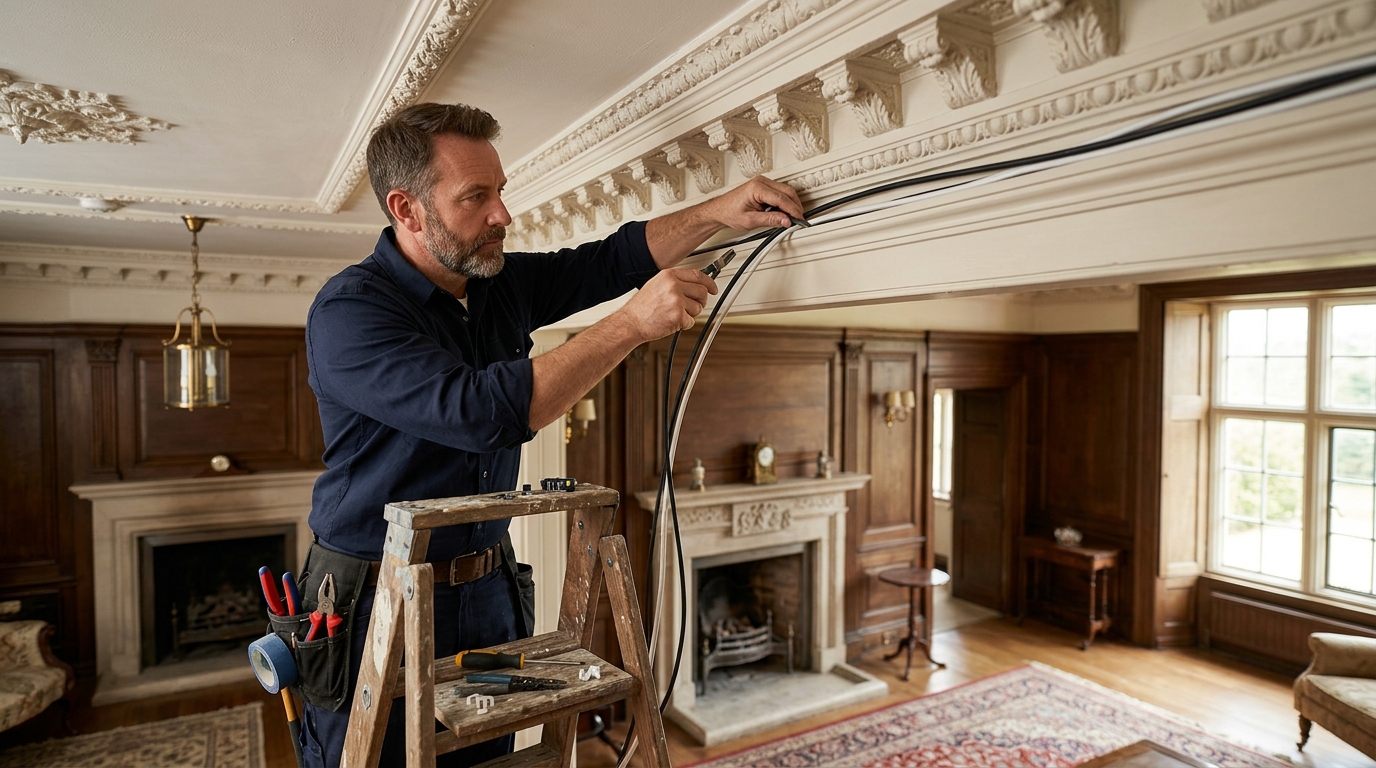
    If you own a period home, you already know the challenge: the top methods for concealing modern wiring in character properties have to work around features that no standard electrician’s handbook ever anticipated. In 2026, a striking 87% of homeowners now prioritise “clutter-free” designs where technology and storage are concealed behind panels or integrated into the architecture, which means the expectation of invisible wiring has gone from luxury to absolute standard, especially in older homes where exposed cable runs can completely undermine a carefully preserved aesthetic.

    Blog illustration

    Key Takeaways

    Question Answer
    What is the best method for hiding wires in a period property? Running cables through wall cavities or inside hollow skirting boards is generally the most discreet approach, preserving original features while keeping wiring completely out of sight.
    Can you chase cables into lath and plaster walls? Yes, but it requires significant experience and delicacy. Lath and plaster is fragile, so professional assessment is strongly recommended before any chasing work begins.
    Is surface trunking acceptable in a listed building? Often yes, particularly if it matches the period aesthetic. Always check with your local authority for listed building consent requirements first.
    Does hidden wiring add value to a character property? Absolutely. Modern, compliant electrical installations improve both saleability and the property’s perceived quality, often recouping more than the installation cost.
    Do I need an EICR after rewiring a character property? Yes. An Electrical Installation Condition Report is required on completion to certify that the work is safe and compliant with current standards.
    Who should I use for concealing wiring in a period home? An experienced electrician with a track record in character properties is essential. The materials and structure of old buildings demand a very different skill set from standard new-build work.
    How much more does rewiring a character property cost? Typically 30-50% more than a modern equivalent, due to preservation requirements, restricted access, and the care needed around original features.

    Why Concealing Wiring in Character Properties Is a Different Challenge Altogether

    Standard modern houses are built with cable runs in mind. The stud walls, plasterboard cavities, and accessible floor voids make hiding wires relatively straightforward.

    Character properties are a different world entirely. Stone walls, solid brick, lath and plaster, decorative cornices, exposed beams, and thatched roofs all create barriers and complications that simply don’t exist in newer builds.

    We work across Wiltshire with homes that have stood for hundreds of years, and we’re no stranger to the intricacies these buildings present. The features that give these properties their charm are often the exact same features that make concealing modern wiring a genuine craft, rather than a basic task.

    Getting it wrong can mean visible patches on irreplaceable plasterwork, cracked cornices, or cable runs that look completely out of place. Getting it right means your home functions as a modern living space while still looking exactly as it should.


    Top Methods for Concealing Modern Wiring in Character Properties – infographic detailing three key concealment methods.

    This infographic presents three practical methods for concealing wiring in character properties. Use these insights to improve aesthetics and safety in design.

    Blog illustration

    Top Methods for Concealing Modern Wiring: Running Cables Through Wall Cavities

    Where wall cavities exist, routing cables through them is often the cleanest solution available. It keeps wiring completely hidden and avoids any visible surface disturbance.

    In solid stone or solid brick properties, true cavities are rare. But timber-framed sections, partition walls added in later periods, and floor voids between storeys frequently offer usable runs that an experienced electrician can work with.

    The key is knowing exactly where these opportunities exist before you start. We always carry out a thorough survey first to map out the viable routes, rather than guessing and causing unnecessary damage.

    • Best for: Timber-framed sections, internal stud partition walls, floor voids between levels
    • Considerations: Requires careful probing to avoid insulation, pipes, and existing cables
    • Skill level: Professional only in most character properties

    This method is often combined with carefully positioned outlet and switch positions to minimise the total cable run length and reduce the number of access points needed.

    Using Hollow Skirting Boards and Architrave as Cable Channels

    One of the most widely used top methods for concealing modern wiring in character properties is repurposing or replacing skirting boards and architrave with hollow versions that accommodate cable runs internally.

    Modern hollow skirting systems are available in profiles that closely replicate traditional period designs, including ogee, torus, and ovolo styles. From a distance, and even up close, they are virtually indistinguishable from solid timber equivalents.

    This approach works particularly well along ground floor walls, around door frames, and between rooms where cables need to travel horizontally without crossing open plaster surfaces.

    “In 2026, high-density polystyrene skirting with built-in cable channels has become widely recognised as a gold standard option, prized for being 100% waterproof and requiring no secondary painting, while replicating traditional wood grains convincingly.”

    For landlords and homeowners who want a clean result without extensive plasterwork, hollow skirting is often the most practical and cost-effective route available.

    Did You Know?

    Smart home features integrated via concealed wiring are projected to increase a home’s resale value by up to 15% over the next decade, and concealed tech-integrated design is ranked as the number one upcoming trend by industry professionals for the 2026 market.
    Source: dabella.us

    Blog illustration

    Top Methods for Concealing Modern Wiring: Surface-Mounted Trunking That Actually Suits the Property

    When chasing cables into walls or routing through cavities is genuinely not possible, surface-mounted trunking remains a legitimate and often very acceptable option, provided it is specified and installed correctly.

    The critical factor is choosing trunking profiles and finishes that are sympathetic to the property’s age and style. Square white plastic trunking in a Georgian hallway looks completely wrong. But a correctly specified dado-height trunking in a painted finish, or a mini trunking run along a cornice line in a matching colour, can be practically invisible.

    Period-style cornice trunking is a particularly effective solution where ceiling heights are generous, as the cable run sits in a zone where the eye naturally expects to see an architectural detail.

    • Square or rectangular mini trunking: Ideal for short horizontal runs at skirting or dado height
    • Cornice-profile trunking: Excellent for rooms with high ceilings where a decorative line is expected
    • Architrave trunking: Fits directly over door frames to carry cables vertically without any plasterwork

    Colour-matching trunking to wall finishes is a simple step that makes a significant difference to the final result.

    Working with Lath and Plaster: The Method That Demands the Most Respect

    Lath and plaster walls and ceilings are one of the defining features of pre-Victorian and Victorian properties, and they are also one of the most common obstacles when it comes to concealing wiring.

    Unlike modern plasterboard, lath and plaster cannot simply be drilled through freely or chased in the same way. The structure relies on the integrity of each individual lath, and damage to even a small area can cause cracking and crumbling well beyond the immediate work zone.

    Character stone properties in Castle Combe, Wiltshire

    The approach we use involves careful probing to locate the lath positions, using the narrowest possible access points, and routing cables through the void behind the plaster wherever the depth of the wall allows.

    Repairs to any access points are carried out using appropriate lime-based materials to match the original finish, rather than modern gypsum plasters that can cause long-term compatibility problems in heritage walls.

    Most people don’t realise that a poorly planned cable run through lath and plaster can result in remedial plastering costs that far exceed the original wiring budget. Taking it slowly and methodically from the start saves significant time and money.

    Top Methods for Concealing Modern Wiring: Chasing Conduit into Solid Masonry

    In solid stone or solid brick properties where no cavity exists and surface trunking is not acceptable, chasing conduit directly into the masonry wall is often the right answer.

    This involves cutting a narrow channel into the wall surface, laying conduit within it, and then making good the finish over the top. When done properly, the result is completely invisible once decorated.

    The challenge in character properties is managing the dust, debris, and vibration that chasing creates, particularly where original decorative features are nearby. Careful masking, specialist narrow-angle grinders, and often hand-chiselling close to cornices or other features are standard practice for us.

    1. Survey the wall to check for existing services before cutting begins
    2. Mark out the route to minimise the channel length and avoid decorative elements
    3. Cut the chase using appropriate tools for the wall material
    4. Install conduit and draw cables through before the channel is closed
    5. Make good with a compatible render or plaster and allow to cure fully before decoration

    In stone properties especially, chasing should always be carried out by someone who understands the difference between loadbearing and non-loadbearing sections. Cutting into the wrong area can have structural consequences that go far beyond aesthetics.

    Blog illustration

    Boxing In Pipes and Cables: A Versatile Option for Awkward Runs

    Where cables need to travel along a route that cannot be hidden within the wall structure, boxing in is a practical and often sympathetic approach, particularly in utility areas, kitchens, and bathrooms within character homes.

    Timber boxing can be built to match existing architectural details, painted to blend with surrounding surfaces, and even profiled to mimic period features. In the right context, a well-built boxing run looks like a deliberate design feature rather than a concealment measure.

    Boxing is also useful in areas where future access to the wiring may be needed, since removing a panel is far less disruptive than opening a chase in a historic wall.

    • Best for: Utility rooms, loft conversions, basement areas, kitchen runs
    • Material choices: MDF with timber trim for paintable finishes; hardwood panelling for more visible locations
    • Access consideration: Build in removable sections wherever future maintenance access is likely to be needed

    Concealing Wiring Behind Period Panelling and Feature Walls

    Many character properties already have timber panelling, wainscoting, or decorative wall treatments. These features create a natural void behind them that can be used very effectively as a cable route, without any intervention in the wall structure itself.

    Where panelling does not already exist, adding it in a style appropriate to the property is one of the top methods for concealing modern wiring in character properties because it serves two purposes simultaneously: it enhances the period aesthetic while providing a clean, accessible cable management system behind it.

    Georgian-style raised and fielded panel designs, Jacobean linenfold patterns, and simple Victorian tongue-and-groove boarding all offer a period-appropriate aesthetic that is well within the reach of a competent joiner working alongside an electrician.

    The key is ensuring that socket and switch positions are planned before the panelling is fitted, so outlets emerge at logical and aesthetically appropriate points in the panel layout.

    Did You Know?

    Replacing hazardous or visible old wiring in character homes can reduce annual insurance premiums by 15-25%. Concealing modern wiring isn’t just about aesthetics; it signals a full system upgrade that directly mitigates fire risks associated with exposed or patched wiring in older houses.

    Blog illustration

    Planning Smart Home Wiring in Heritage Properties: Getting It Right the First Time

    In 2026, character properties are increasingly being upgraded with smart home technology, and this creates a new layer of complexity for cable concealment. Modern character homes now require up to 50% more electrical capacity than those updated just 15 years ago, driven by EV chargers, home automation, and whole-house audio-visual systems.

    This means that traditional approaches of simply “tucking a wire behind the skirting” are no longer sufficient. The volume and variety of cabling involved in a smart home upgrade, data cables, power cables, speaker runs, and control wiring, demands a properly planned concealment strategy.

    The most important principle is to plan the full scope of what you want the property to do before any cables are hidden. Retrofitting additional data runs through a wall that has already been made good is significantly more expensive and disruptive than running everything in a single planned phase.

    • CAT6 data cabling should be planned alongside power circuits, not as an afterthought
    • Central distribution points (media plates or structured wiring cabinets) can be housed in cupboards or built-in furniture to keep them out of sight
    • Wireless systems can reduce cable volume, but they still require power runs and WAP (wireless access point) installations that need to be planned and concealed

    Working with an electrician who understands both traditional building methods and modern smart home requirements is genuinely the most important factor in getting this right.

    When Professional Help Is Not Just Recommended, It Is Essential

    We’d be the first to say that some straightforward cable tidying is well within the capabilities of a competent homeowner. Clipping a short run of cable behind furniture, or fitting a simple surface-mounted trunking section, does not require a specialist.

    But in a character property, the situations where professional involvement becomes genuinely essential are frequent. Lath and plaster, loadbearing stone walls, decorative cornices, listed building restrictions, and the presence of old wiring systems (including rubber-insulated cables from earlier decades) all create scenarios where getting it wrong can be both dangerous and extremely expensive to fix.

    We work with homeowners, landlords, and builders across Wiltshire on exactly these kinds of projects, and the properties we work in are the same ones that give this county its identity and character. That matters to us, and it shapes how we approach every job.

    An NICEIC-registered electrician will also ensure that all work is certified on completion, giving you an Electrical Installation Condition Report that confirms the installation meets current standards. This is not optional for rental properties and is strongly advisable for any property sale.

    “40% of homeowners in 2026 plan to outsource renovation tasks entirely to professionals, up from 32% the previous year, specifically to handle complex infrastructure like hidden wiring. The trend clearly shows that people are moving away from DIY visible cable tracks and toward professionally installed, seamless solutions.”

    Blog illustration

    Does Investing in Concealed Wiring Actually Pay Off in a Character Property?

    The short answer is yes, and often more than homeowners expect. Exposed wiring in a character property sends a specific message to buyers and valuers: that the electrical system is old, potentially unsafe, and will require significant work.

    Buyers frequently overestimate the cost of replacing old wiring by 50 to 100%, meaning that what is actually a manageable investment gets priced in negotiations as a near-impossible project. Investing in properly concealed, modern wiring before a sale removes that uncertainty entirely and protects your asking price.

    Beyond sale value, there are practical day-to-day benefits. A property with modern, correctly concealed wiring can accommodate the electrical demands of contemporary life, including EV charging, smart home devices, and high-capacity kitchen and bathroom circuits, without the visual compromise of surface cable runs or the safety concerns of an ageing installation.

    For landlords especially, the combination of improved safety, lower insurance premiums, and compliance with current electrical safety regulations makes the investment in concealed modern wiring a straightforward decision, not just a cosmetic one.

    Conclusion

    The top methods for concealing modern wiring in character properties are not a one-size-fits-all list. Every period building presents its own specific combination of materials, features, and constraints, and the right approach depends on an honest assessment of what the building will and will not allow.

    Whether that means running cables through floor voids, fitting hollow skirting boards, chasing conduit into solid masonry, or adding sympathetic timber panelling as a dual-purpose feature, the goal is always the same: a home that functions for modern life while looking exactly as it should.

    If you’re working on a character property in Wiltshire and you want to get the concealment done properly, without unnecessary damage and without cutting corners on safety, we’d love to help. Get in touch with us today for a no-obligation conversation about what your property needs, and we’ll come to you and take a proper look before any work begins.

    We pride ourselves on providing friendly, professional services that treat your property with the care and consideration it deserves. After all, these buildings have stood for centuries, and they deserve an electrician who understands that.

  • Best Complete House Rewiring Solutions for Older Properties: Your 2026 Expert Guide

    Best Complete House Rewiring Solutions for Older Properties: Your 2026 Expert Guide

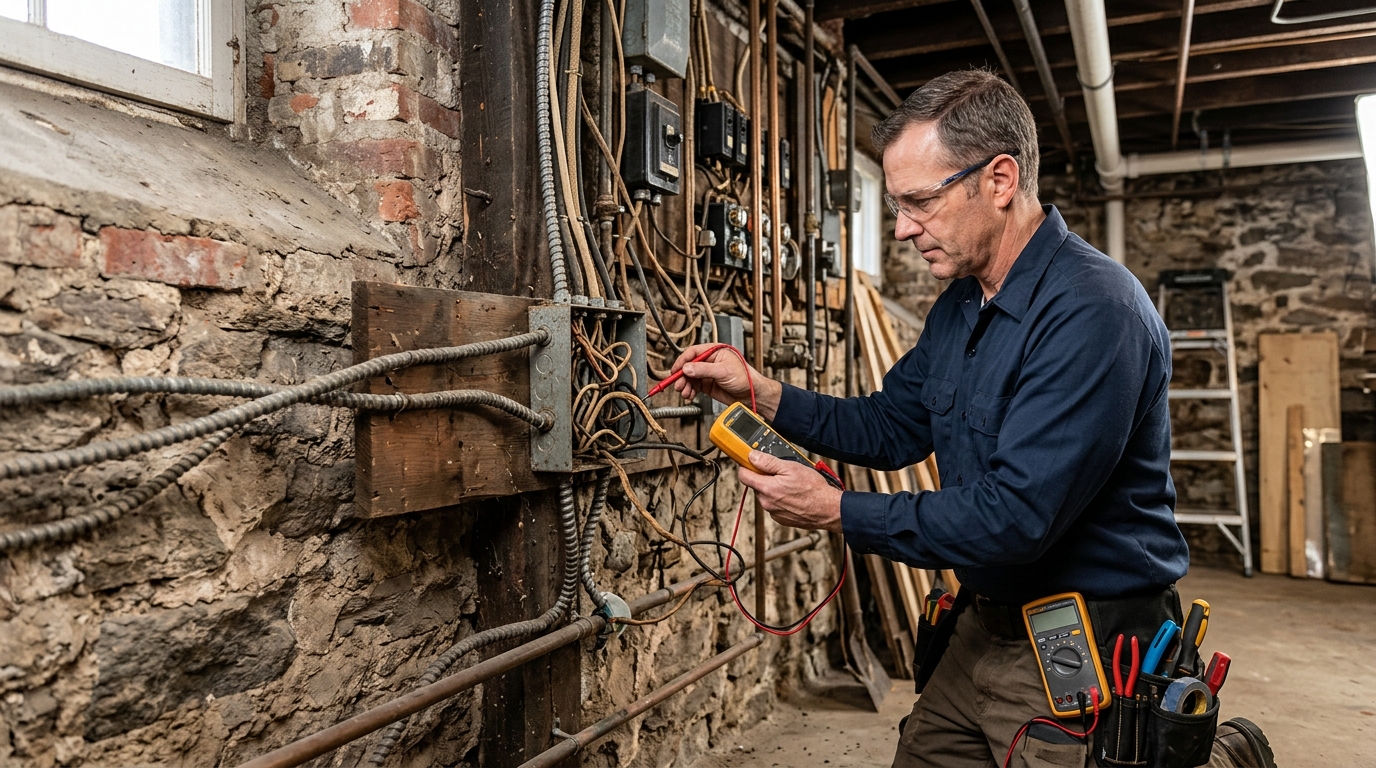
    Electrical malfunctions account for 13% of all residential fires, causing an average of $1.3 billion in property damage every year, and older homes with ageing wiring are among the highest-risk properties on the market. If you own or manage a period home and you’re searching for the best complete house rewiring solutions for older properties, this guide covers everything you need to know, from spotting the warning signs to choosing the right team and understanding what the work actually involves.

    Blog illustration

    Key Takeaways

    Question Answer
    How do I know if my older property needs a full rewire? Key warning signs include flickering lights, outdated fuse boxes, rubber-coated or fabric wiring, and persistent circuit breaker trips.
    How long does a complete house rewire take? A standard 3-bedroom house typically takes 5 to 7 days if occupied, or 3 to 5 days if the property is vacant during the work.
    Do I need an EICR before or after a rewire? An Electrical Installation Condition Report (EICR) is issued after the rewire is complete to certify all new work meets current standards.
    Is rewiring an older property worth the investment? Yes. A complete rewire can increase property value by 8% to 10%, and can also reduce your home insurance premiums significantly.
    What makes older properties more complex to rewire? Features like lath and plaster walls, conduit piping, and decorative cornices require specialist knowledge and a careful, considerate approach.
    Do I need a certified electrician for a house rewire? Absolutely. NICEIC registered contractors are required to certify all electrical work, ensuring your property is safe and legally compliant.
    Can I stay in my home during a rewire? In most cases, yes, though there will be periods without power. Your electrician can advise on the best approach for your specific property.

    Why Older Properties Need Complete House Rewiring Solutions

    Older properties are part of what gives Wiltshire and the surrounding areas their character and charm, but beneath their beautiful exteriors, many are running on electrical systems that are decades past their safe working life.

    Wiring that was installed 40, 50, or even 60 years ago was simply not designed to cope with the demands of modern living. Most people don’t realise that modern homes now require 50% more electrical capacity than properties built just 15 years ago, largely due to EV chargers, smart tech, and high-powered appliances.

    The best complete house rewiring solutions for older properties don’t just address the immediate safety risk. They future-proof your home and bring it fully in line with 2026 electrical standards.

    Blog illustration

    Warning Signs Your Older Property Needs a Full Rewire

    If you’re not sure whether your property needs a complete rewire or a partial upgrade, there are some tell-tale signs to watch for. Catching these early can make a real difference to safety and cost.

    • Flickering or dimming lights when appliances switch on
    • Persistent circuit breaker trips or blown fuses
    • Scorch marks around sockets or switches
    • Old-style round-pin sockets or Bakelite fittings
    • Fabric or rubber-coated wiring visible in the loft or fuse board
    • An outdated fuse box without modern RCD protection
    • A burning smell near your consumer unit or sockets
    • Extensions running everywhere because there aren’t enough circuits

    If you’re experiencing one or more of these issues, it’s worth getting a professional inspection as soon as possible. We offer free, no-strings-attached quotes, so there’s no pressure and no guesswork involved.

    Best Complete House Rewiring Solutions: Understanding Your Options

    Not all rewiring projects look the same, and the right solution for your property depends on its age, construction, and your long-term plans. Here’s a clear breakdown of the main approaches we use.

    Solution Type Best For Key Benefit
    Full House Rewire Properties with wiring 25+ years old Complete safety overhaul, full certification
    Partial Rewire Specific areas or circuits only Cost-effective if only part of the system is failing
    Consumer Unit Upgrade Homes with outdated fuse boards Adds RCD and AFCI protection to existing circuits
    Smart Rewire Homeowners planning smart home upgrades Future-proofs for EV chargers, smart controls, and more
    Knob and Tube Replacement Pre-1950s properties with legacy wiring Removes uninsurable and highly dangerous wiring systems

    The best complete house rewiring solutions for older properties are always tailored to the building itself. We assess each job individually and recommend only what’s genuinely needed.

    Did You Know?

    Installing Arc Fault Circuit Interrupters (AFCIs) during a rewire can reduce home electrical fires by an estimated 50%.

    Blog illustration

    How We Handle Rewiring in Period Properties with Tricky Construction

    Working in older properties is something we genuinely enjoy. Buildings that give Wiltshire its character and charm deserve to be treated with real care, and we approach every project with that in mind.

    Features like lath and plaster walls, conduit piping, decorative cornices, and original timber joinery all require a more considered technique than a standard new-build rewire. We’re no stranger to the intricacies of working with both new builds and older buildings, and that experience makes a real difference to the finished result.

    Our team works with delicacy and consideration, minimising unnecessary damage to walls, ceilings, and original features wherever possible. We also plan cable routes carefully to avoid disrupting original plasterwork and heritage details that simply can’t be replaced.

    This specialist knowledge is exactly why finding the right team matters so much when it comes to the best complete house rewiring solutions for older properties. A generic approach simply doesn’t cut it.


    5-step plan for best complete house rewiring solutions in older properties.

    A concise 5-step guide to planning a complete rewiring in an older home. It highlights safety, permits, budgeting, and selecting the right components.

    What to Expect During a Complete House Rewire

    One of the most common questions we hear is: “What actually happens when you rewire a house?” It’s a fair question, and we’re always happy to walk you through the process before we start.

    Here’s a straightforward overview of what a typical full rewire involves from start to finish:

    1. Initial Assessment: We inspect the existing system and identify what needs to change, then provide a free, detailed quote.
    2. Planning the Work: We agree on cable routes, socket and switch positions, and a schedule that works around your daily life.
    3. First Fix: All new wiring is installed throughout the property, threading cables through walls, floors, and ceilings.
    4. Plastering (if needed): Any necessary wall openings are made good before we move to the next phase.
    5. Second Fix: Sockets, switches, light fittings, and the new consumer unit are all connected and fitted.
    6. Testing and Certification: We carry out full testing and issue your NICEIC-certified Electrical Installation Condition Report (EICR).

    A standard 3-bedroom house rewire typically takes 5 to 7 days if the property is occupied, or 3 to 5 days if it’s vacant, so the disruption is manageable for most families.

    Best Complete House Rewiring Solutions for Landlords and Rental Properties

    If you’re a landlord, the rules around electrical safety are clear and getting stricter. Rental properties are legally required to have up-to-date electrical systems, and our services for landlords cover everything from full rewires to EICR certification for compliance.

    Older rental properties are particularly vulnerable to enforcement action if the wiring hasn’t been inspected or updated in recent years. A failed EICR can mean you’re unable to legally let the property until remedial work is completed.

    “Full electrical services for the savvy landlord. We handle EICR reports and safety updates so you stay compliant, stay protected, and keep your tenants safe.”

    We work efficiently and communicate clearly throughout so that void periods are kept to an absolute minimum. Getting the best complete house rewiring solutions for older properties right first time saves time, money, and stress in the long run.

    Blog illustration

    NICEIC Certification and Electrical Safety Compliance

    We are NICEIC registered contractors, which means every piece of work we carry out is independently assessed and certified. This isn’t just a badge on the website; it’s a genuine guarantee of quality and safety for you and your property.

    What exactly does NICEIC registration mean for you? In short, it means that when we issue your Electrical Installation Condition Report (EICR), it carries real legal and insurance weight. Your insurer, your local authority, and any future buyer or tenant can trust it.

    For older properties in particular, having a certified EICR after a full rewire is essential. It confirms that the entire electrical installation meets current 2026 standards, and it protects you from liability if anything were ever to go wrong.

    You can learn more about our full range of certified electrical services and what’s included on our services page.

    Did You Know?

    Complete rewiring of an older home can increase its overall property value by 8% to 10%.

    Best Complete House Rewiring Solutions: Costs and What Affects Your Quote

    Cost is one of the first things people ask about, and it’s completely understandable. Rewiring an older property is a significant investment, and it’s important to know what you’re paying for.

    Labor costs typically account for 50% to 70% of the total rewiring bill, which is why quotes for older properties can seem high. Threading cables through original construction materials like solid brick walls, lath and plaster, and original joinery takes considerably more time than working in a modern timber-frame home.

    Here are the main factors that affect the final cost of your rewire:

    • Size of the property: More rooms and floors mean more circuits, more cable runs, and more time.
    • Age and type of existing wiring: Legacy systems like knob and tube wiring require specialist handling and add to the complexity.
    • Wall construction: Solid walls and lath and plaster are harder to work with than modern stud walls, and costs can jump from £2-£4 per square foot to £5-£8 per square foot if walls must be opened and repaired.
    • Number of circuits needed: Modern homes need more circuits than older properties were designed for, particularly for kitchens and home offices.
    • Additional upgrades: Adding EV charger points, smart home wiring, or extra sockets increases the scope of work.
    • Whether the property is occupied: Occupied properties take longer and require more planning around daily routines.

    We always provide a free, no-strings-attached quote so you know exactly what you’re committing to before any work begins. Get in touch today to arrange yours.

    Blog illustration

    Modern Upgrades to Include in Your House Rewire

    A full rewire is the perfect opportunity to future-proof your property. Once the walls are open and the circuits are being replaced, adding modern upgrades costs far less than returning to do them separately later.

    Here are the upgrades we most often recommend including alongside the best complete house rewiring solutions for older properties:

    • 200-amp smart electrical panel: Many insurers now offer a 10% to 15% discount specifically for homes that upgrade to a modern 200-amp smart panel. It pays for itself over time.
    • Arc Fault Circuit Interrupters (AFCIs): These detect dangerous arcing in wiring and cut power before a fire can start. An essential addition to any older property rewire.
    • EV charger points: With electric vehicles now mainstream in 2026, having a dedicated EV circuit installed during a rewire is far more cost-effective than retrofitting later.
    • USB sockets: A simple but genuinely useful upgrade that removes the need for adapters at every socket across the property.
    • Smart home wiring: Pre-wiring for smart lighting, heating controls, and security systems is much easier to integrate during a rewire than after.
    • Additional circuits for kitchens and home offices: Modern appliances demand dedicated circuits that older properties simply weren’t designed to provide.

    These additions don’t just make your home safer. They make it genuinely better to live in and significantly more appealing to future buyers or tenants.


    A shot of brick stone houses on the Main Street Castle Combe, UK

    We work across Wiltshire, including in historic areas like Castle Combe, where older properties require particular care and specialist knowledge during a rewire.

    Best Complete House Rewiring Solutions: Choosing the Right Electrical Team

    Not every electrician has experience with the specific challenges of older properties. Choosing the wrong team can mean unnecessary damage to original features, a rewire that doesn’t meet current standards, or worse, safety issues that get missed entirely.

    Here’s what to look for when choosing who carries out your complete house rewire:

    • NICEIC registration: This is the industry standard for certified electrical contractors in the UK. Always check before you book.
    • Experience with older properties: Ask specifically about their experience with lath and plaster, period features, and legacy wiring systems.
    • Transparent quoting: A trustworthy team will provide a detailed, itemised quote before any work starts. No hidden surprises.
    • Local knowledge: A team that works regularly in your area understands the types of properties and construction methods common to the region.
    • Clear communication: You should always know what’s happening, when, and why. If an electrician can’t explain things clearly, that’s a red flag.

    We’ve been working across Wiltshire for over five years and we’re proud to have built a reputation as a team that gets the job done properly, efficiently, and with real respect for the properties and people we work with. You can read more about our experience and approach to older property rewiring.

    Blog illustration

    Emergency Electrical Support for Older Properties

    Sometimes an electrical fault doesn’t wait for a convenient moment. If your older property develops a serious electrical fault, a wiring failure, or a complete power outage, our emergency callout service is available to help.

    Like superheroes, but for electrical services, we’ll get to you as fast as possible to try and save the day. Older properties with ageing wiring are statistically more prone to sudden failures, which is exactly why having a trusted team on call matters.

    If you’re not yet at the point of a full rewire but something is clearly wrong, don’t ignore it. Faults in older wiring systems can escalate quickly, and early intervention is always safer and cheaper than dealing with the aftermath of a serious electrical fault.

    Our team can help resolve issues with your electrical system efficiently and safely, whether that means a rapid fix or a clear recommendation that a full rewire is the right next step. Visit our homepage to find out more about our full range of services across Wiltshire.

    Conclusion

    Finding the best complete house rewiring solutions for older properties takes specialist knowledge, the right team, and a clear plan tailored to your specific building. Older homes are worth protecting, and a properly executed full rewire is one of the most effective investments you can make in their safety, liveability, and long-term value.

    From period cottages with lath and plaster walls to Victorian terraces with decades-old conduit wiring, we’ve seen it all and we know how to handle it. Our team brings over five years of hands-on experience, NICEIC certification, and a genuine commitment to getting it right for every property we work in.

    If you’re ready to take the next step, or you’re just not sure where to start, we’d love to hear from you. Get a free, no-strings-attached quote by visiting our contact page, and we’ll be happy to help.

  • Top Benefits of Professional Full Domestic Rewiring Services: What Every Homeowner Needs to Know in 2026

    Top Benefits of Professional Full Domestic Rewiring Services: What Every Homeowner Needs to Know in 2026

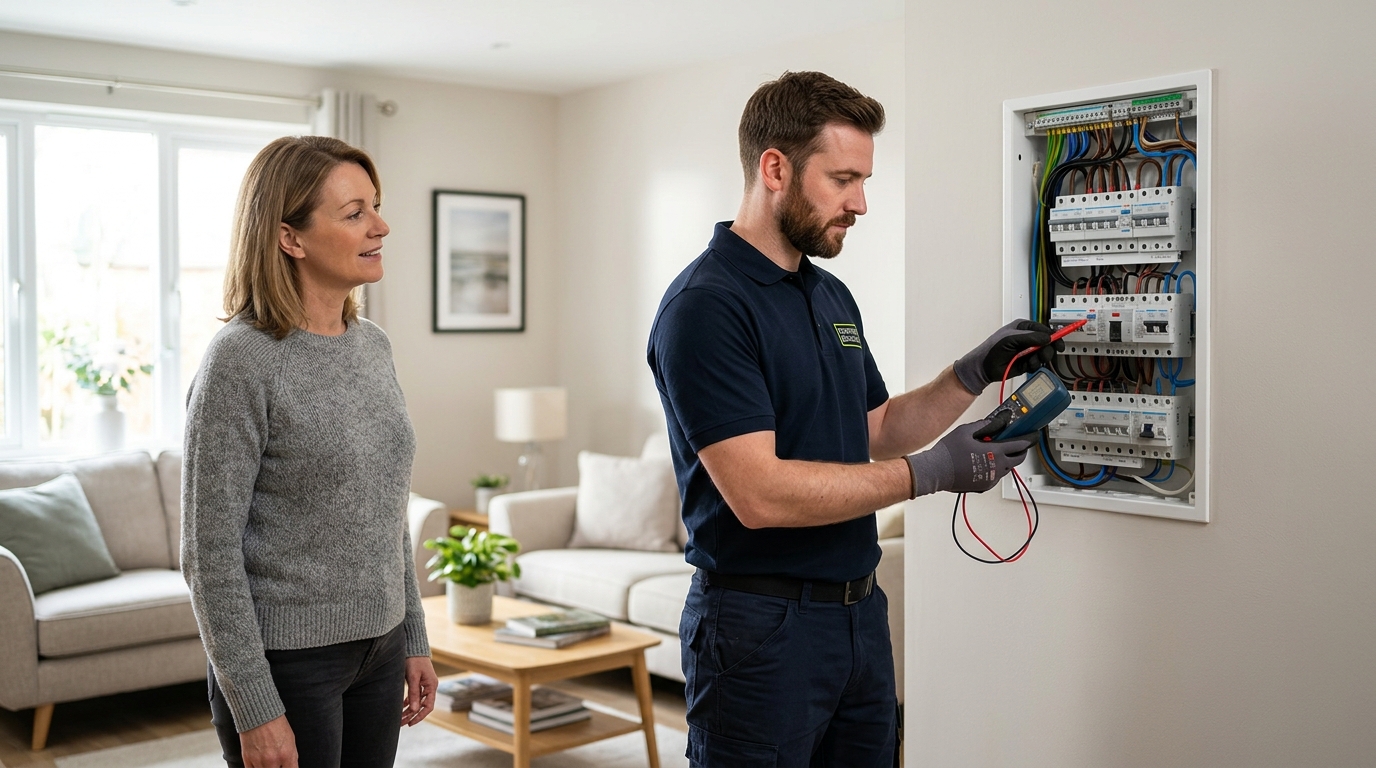
    If you have ever wondered whether your home’s wiring is keeping pace with modern demands, you are not alone — and the stakes are higher than most people realise. Homes built before 1973 are 55 times more likely to have fire hazards due to outdated aluminum wiring, and this is exactly why understanding the top benefits of professional full domestic rewiring services has never been more important. At Greener Electrical, we help homeowners across Wiltshire and beyond make informed decisions about their electrical systems, safely and with complete peace of mind.

    Blog illustration

    Key Takeaways

    Question Quick Answer
    Is professional rewiring really necessary? Yes. Outdated wiring is a leading cause of residential fires and fails to meet modern safety regulations. Learn more about the rewiring and electrical services we offer.
    How do I know my home needs rewiring? Common signs include flickering lights, frequently tripping circuits, scorch marks around sockets, and wiring older than 25 years.
    What certificate should I receive after a rewire? A certified electrician will issue an Electrical Installation Certificate (EIC). Read about the different electrical certificates and what they cover.
    Will rewiring affect my home insurance? Yes, positively. Many insurers reduce premiums for homes with up-to-date, certified wiring installations.
    Does rewiring add value to my property? Absolutely. Modern, certified wiring is a strong selling point, particularly with buyers wanting smart home capability.
    Should I only use a registered electrician for a full rewire? Without question. A NICEIC registered contractor guarantees the work meets current regulations and is fully certified. Find out more about our credentials.
    How disruptive is a full domestic rewire? With the right team, disruption is kept to a minimum. We plan every project carefully and work cleanly and efficiently throughout.

    Why Full Domestic Rewiring Matters More Than Ever in 2026

    The electrical demands of a modern home look nothing like they did even a decade ago. We are now running smart speakers, EV chargers, induction hobs, home offices, and a vast array of connected devices, all from a single domestic system.

    Many older properties simply were not built to handle this kind of load. Pushing an outdated system beyond its limits does not just cause inconvenience, it creates genuine fire risk and electrical failure.

    In 2026, the top benefits of professional full domestic rewiring services are more relevant than ever, as homeowners face mounting pressure from energy costs, insurance expectations, and technology upgrades simultaneously.

    • Modern homes use significantly more electricity than properties built pre-1990
    • Smart home technology requires stable, high-capacity wiring to function safely
    • Building regulations have evolved, meaning older wiring may no longer be compliant
    • Property buyers are increasingly demanding proof of electrical safety and certification

    Blog illustration

    Top Benefits of Professional Full Domestic Rewiring Services: Enhanced Home Safety

    The single most important reason to invest in a professional full domestic rewire is straightforward: safety. Old wiring degrades over time, insulation becomes brittle, and connections loosen, all of which create serious hazards.

    Electrical malfunctions account for 13% of all residential house fires, and the majority of these incidents involve properties with aging or poorly maintained wiring. A full rewire replaces every element of your system, eliminating those failure points at the source.

    When we carry out a full domestic rewire, we do not just replace the cables. We install modern consumer units, update all sockets and switches, and ensure every circuit is correctly sized for the load it will carry.

    “Safety is our top priority in every project we undertake. From the first cable we pull to the final certificate we issue, every step is carried out with precision and care.”

    This is also the stage where we look out for common home appliance fire hazards that go hand in hand with old wiring, making a rewire the ideal opportunity to address multiple risks at once.

    Regulatory Compliance and the Importance of Proper Certification

    Current UK wiring regulations (BS 7671, also known as the IET Wiring Regulations) set out clear requirements for how domestic electrical systems must be installed and maintained. Older properties frequently fall short of these standards simply due to their age.

    As NICEIC registered contractors, all of our rewiring work is fully certified and compliant with the latest edition of BS 7671. You will receive an Electrical Installation Certificate (EIC) upon completion, giving you solid documentary proof that your home meets current standards.

    This certification matters in a number of practical situations:

    1. Selling your property — buyers and their solicitors will ask for it
    2. Insurance claims — insurers may reject claims on properties without compliant wiring
    3. Landlord obligations — rental properties require an EICR every five years by law
    4. Mortgage applications — lenders increasingly require electrical certification

    We explain all of this in plain English, not technical jargon, so you always know exactly what you are getting and why it matters.

    Did You Know?

    Proper AFCI (Arc Fault Circuit Interrupter) installation can reduce home electrical fires by up to 50%. A professional full domestic rewire typically includes fitting these modern protective devices as standard.

    Blog illustration

    Top Benefits of Professional Full Domestic Rewiring Services for Older Properties

    Period properties and older homes present their own unique set of challenges. The original wiring in many Victorian, Edwardian, and mid-century homes was never designed to carry modern electrical loads, and the materials used have long since passed their safe operational lifespan.

    At Greener Electrical, we specialise in working with older buildings. We understand the intricacies of traditional construction and take real care to achieve a high-quality finish with minimal disruption to original features.

    Here is what a professional full domestic rewiring service typically addresses in an older property:

    • Rubber or fabric-insulated wiring that has become brittle and prone to cracking
    • Outdated fuse boxes with no modern RCD or AFCI protection
    • Insufficient sockets leading to dangerous overuse of extension leads and adapters
    • Unprotected bathroom circuits that do not meet current IP rating requirements
    • Inadequate earthing on older metal pipework and fittings

    Understanding bathroom electrical safety zones is particularly important in older homes where bathrooms may have been retrofitted with electrical items that do not comply with current zone requirements.

    We always carry out a detailed assessment before any rewiring work begins, so you know exactly what is involved and there are no surprises along the way.


    Infographic: top benefits of professional full domestic rewiring services—safety, reliability, efficiency, compliance, savings.

    This infographic highlights the five key benefits of professional full domestic rewiring. It shows how safety, reliability, and efficiency translate into long-term value for homeowners.

    Energy Efficiency Gains from a Professional Full Rewire

    A full domestic rewire is not just about safety — it is also a meaningful step towards a more energy-efficient home. Old, degraded wiring introduces resistance into your circuits, which causes energy to be lost as heat rather than being used productively.

    New cabling, correctly sized for each circuit’s demands, runs more efficiently and reduces the likelihood of overloading. This directly affects your energy bills and the overall performance of your appliances.

    When we rewire a home, we also take the opportunity to plan circuit layouts that genuinely make sense for how the home is used. Dedicated circuits for high-demand appliances, properly zoned lighting circuits, and well-positioned consumer units all contribute to a cleaner, more efficient system.

    Combined with energy-efficient lighting upgrades and smart controls, a professional rewire lays the foundation for a genuinely modern, lower-cost home to run. Helping you transition to a more sustainable way of living is central to everything we do at Greener Electrical.

    Blog illustration

    Future-Proofing Your Home for Smart Technology

    Smart home adoption has risen significantly, and in 2026 a substantial portion of UK homeowners are using or planning to use connected devices, automated systems, and smart energy management tools. The catch is that many of these technologies require a robust, stable electrical infrastructure to work safely and reliably.

    A professional full domestic rewiring service gives you that infrastructure. Modern cabling, a correctly specified consumer unit, and dedicated circuits mean your home is ready for:

    • EV charging points — dedicated high-current circuits for home charging
    • Smart heating and thermostat systems — reliable low-voltage wiring for connected controls
    • Home office setups — stable, surge-protected circuits for sensitive equipment
    • Solar panel integration — correctly configured circuits to handle generation and storage
    • Security and doorbell systems — clean power supply for always-on devices

    If you are considering installing a video doorbell or smart entry system, having a properly rewired home makes that process far simpler and safer. You can find practical guidance on wiring in a video doorbell on our blog.

    Future-proofing your home with bespoke electrical solutions for modern living is a core part of what we offer at Greener Electrical, and a full rewire is always the best starting point.

    Top Benefits of Professional Full Domestic Rewiring Services for Property Value

    It is easy to think of a rewire purely as a maintenance cost. In reality, it is a genuine investment that adds measurable value to your property. Modern, certified wiring is one of the first things that prospective buyers and surveyors assess when evaluating a home.

    Properties with documented, up-to-date electrical systems sell more quickly and with fewer complications during conveyancing. Buyers are aware that a rewire is a significant expense, and a home that already has certified, modern wiring removes a major concern from their list.

    With 78% of homebuyers willing to pay more for a home equipped with modern smart technology, having the electrical infrastructure already in place gives your property a clear advantage. A professional rewire makes your home genuinely tech-ready, not just theoretically capable of it.

    For landlords, the benefits are equally clear. A fully rewired and certified rental property commands higher rents, attracts better tenants, and keeps you firmly on the right side of your legal obligations as a landlord.

    Did You Know?

    Home insurance premiums have jumped 24% on average over the last three years. Professional rewiring is one of the few major home improvements that can actively help you negotiate lower premiums by demonstrating reduced fire risk.
    Source: CBS News 2025

    Blog illustration

    Protecting Your Home Insurance and Your Finances Long Term

    Many homeowners do not realise that their insurance policy may be invalid or significantly limited if their wiring is found to be non-compliant or outdated at the time of a claim. This is a risk that is genuinely not worth taking.

    Insurance providers in 2026 are increasingly scrutinising electrical safety as part of underwriting. A professionally rewired home, backed by an Electrical Installation Certificate, gives insurers the confidence they need and often translates directly into lower premiums.

    Beyond insurance, consider the financial cost of not acting. Electrical malfunctions cause an estimated $1.3 billion in property damage annually in the US alone, and the pattern is similar across the UK. The one-time cost of a professional full domestic rewiring service is far lower than the potential cost of fire damage, emergency repairs, or legal liability.

    Protecting your home from electrical surges and power spikes is another layer of protection that a well-planned rewire can incorporate, further reducing the long-term risk to your property and possessions.

    What to Expect from a Professional Full Domestic Rewiring Service

    One of the most common concerns we hear from homeowners is about disruption. A full rewire sounds like a major undertaking, and in some ways it is, but with the right team in place it is a manageable and well-organised process.

    Here is a straightforward breakdown of what a typical professional full domestic rewiring project involves:

    1. Initial assessment and survey — we inspect the existing system and discuss your needs in detail
    2. Free, no-obligation quote — clear pricing with no hidden surprises
    3. Planning and preparation — circuit layouts, cable routes, and consumer unit specification agreed in advance
    4. First fix — cables are run throughout the property before plastering or finishing work
    5. Second fix — sockets, switches, consumer unit, and fittings are installed and connected
    6. Testing and inspection — every circuit is tested to BS 7671 standards before sign-off
    7. Certification — you receive your Electrical Installation Certificate and a full record of the work

    We pride ourselves on being tidy, punctual, and polite throughout every project. We explain what we are doing at every stage, in plain English, so you are never left wondering what is happening in your own home.

    Blog illustration

    Why Choosing NICEIC Registered Contractors Is Non-Negotiable

    When it comes to something as safety-critical as a full domestic rewire, the credentials of the electricians you choose matter enormously. NICEIC registration is not simply a badge — it is proof that a contractor is assessed annually against current industry standards and that their work meets the requirements of BS 7671.

    At Greener Electrical, we are fully NICEIC registered, which means every rewire we complete is automatically notified to your local authority and fully certified. You do not need to arrange separate building control approval, because we handle that as part of the service.

    Our team stays up to date with the latest industry regulations, so you can be confident that the work we carry out today will remain compliant well into the future. We also work with a wide range of clients, from homeowners and landlords to builders and business owners, all of whom rely on us for certified, high-quality electrical work. You can see the full range of clients we work with to understand the breadth of our experience.

    If you want reliable service you can count on, from the first call to the final check, we are just a phone call away. Get in touch with us today for a free, no-strings-attached quote tailored to your home.

    Conclusion

    The top benefits of professional full domestic rewiring services are clear: enhanced safety, full regulatory compliance, improved energy efficiency, future-ready infrastructure, and genuine financial value. Whether your home is a period property with original wiring or a 1990s build struggling to keep up with modern demands, a professional rewire is one of the most impactful investments you can make.

    At Greener Electrical, we bring the expertise, the NICEIC certification, and the personal, local approach that makes the whole process straightforward and stress-free. We explain everything in plain English, work cleanly and efficiently, and leave you with a fully certified electrical system you can trust for decades to come.

    The top benefits of professional full domestic rewiring services are not just about fixing what is broken — they are about giving your home a genuinely safe, reliable, and future-proof electrical foundation. Do not wait for a problem to force your hand. Contact us today and let us help you get it right, properly and safely, first time.

  • Why Your House Might Need a Rewire

    Why Your House Might Need a Rewire

    If you’ve noticed flickering lights or sockets that buzz like they’re auditioning for a role in a horror movie, it might be time to ponder whether your house needs a rewire. Properties older than 25 years often harbour outdated wiring that could pose serious safety risks, not to mention the inconvenience of tripping circuits at the most inopportune moments. And let’s not even start on those charming old fuse boxes. So, what exactly does a rewiring project involve, and why is it more vital than you might think?

    Signs a House Needs Rewiring

    Recognizing the signs that your house might need rewiring can save you from potential hazards and costly repairs down the line. If you’ve noticed flickering lights, buzzing sockets, or tripping circuits, these are more than just minor annoyances; they’re safety hazards indicating your wiring may be outdated. Properties over 25 years old often fall into this category, especially if you spot old-fashioned fuse boxes or cables with PVCu insulation.

    Using extension leads to compensate for the lack of sockets is another red flag, hinting that your home’s electrical system might be old.

    While you might be tempted to tackle rewiring as a DIY project, be aware of the risks involved; it’s not just about getting your hands dirty but also ensuring safety and compliance with current standards.

    A professional assessment provides a clear view of your wiring’s condition and can highlight the cost implications of neglecting these issues.

    Investing in rewiring now yields long-term benefits, ensuring your home is safe, functional, and ready for modern electrical demands—without worrying about becoming a headline in the local news.

    What Does Rewiring a House Involve?

    When it comes to addressing the electrical issues in your home, understanding what rewiring a house involves is key. Rewiring isn’t just a fancy term; it’s a crucial process that replaces old wiring and installs new consumer units, ensuring your circuits are safe and ready to use. This includes modernizing circuits to meet current electrical standards because, let’s face it, your home deserves better than outdated cables that could trigger a fire alarm.

    As you commence on this journey, be prepared for some concealed wiring work. Electricians might need to lift floorboards or chase out plasterwork in your walls, which sounds more dramatic than it is—think of it as giving your home a makeover.

    Safety upgrades are paramount during this process. By addressing flickering lights and avoiding overreliance on extension leads, you’re not just improving functionality; but making your home safer. Plus, many professional electricians offer fixed pricing for rewiring projects so that you won’t be surprised by unexpected costs. It’s all about creating a safe, modern environment—one circuit at a time!

    What is an Electrical Installation Condition Report (EICR)

    An Electrical Installation Condition Report (EICR) serves as your property’s electrical health check, thoroughly inspecting all wiring and installations. Understanding the EICR process is essential; a qualified electrician will assess your electrical system, identifying potential safety issues or defects.

    The EICR benefits you by clearly showing your current wiring condition and determining whether a rewire is necessary.

    The importance of an EICR can’t be overstated. It safeguards against hazards like electrical fires, ensuring your home remains safe and compliant with regulations. Generally, it’s recommended to have an EICR conducted every ten years, depending on your property’s age and usage.

    The cost of EICR can vary depending on the size of your home and the complexity of the system, but it’s a worthy investment for peace of mind. By regularly scheduling your EICR, you can stay ahead of electrical issues, saving yourself from more extensive and costly rewiring in the long run.

    Things to Consider When Rewiring a House

    Rewiring a house is no small feat, and thoughtful planning is essential to navigate the complexities involved. First, consider the cost implications; rewiring can be an investment, and you’ll want to budget for both materials and labour. Safety concerns should be at the forefront of your mind—outdated wiring poses a significant fire risk, so addressing this isn’t just a luxury; it’s a necessity.

    Next, be realistic about timeframe expectations. Depending on the size of your home and the extent of the work, rewiring can take anywhere from a few days to several weeks. You’ll need to prepare for some disruption, possibly relocating furniture and lifting floorboards.

    Don’t overlook upgrading options while you’re at it. This is a prime opportunity to install modern switches and outlets, which will enhance both aesthetics and functionality.

    Lastly, consider future-proofing considerations. As technology advances, think about wiring for smart home systems or additional outlets that may be needed. With careful planning, you can transform your electrical system from outdated to state-of-the-art, ensuring safety and convenience for years.

    -How often should a house be rewired?

    Every homeowner should be aware that houses ideally need a rewire every 25 to 30 years. This rewiring frequency isn’t just a suggestion from your friendly neighbourhood electrician; it’s a crucial step in complying with safety standards and ensuring your home remains a safe haven. If your property is over 25 years old, it’s worth considering how its age could affect its electrical system’s integrity.

    Usage patterns also play a significant role. If you’ve turned your cosy abode into a bustling hub of electronic devices, you might find that outdated wiring could lead to potential hazards, such as electrical fires or short circuits. Additionally, changes in electrical regulations mean what was once acceptable might now be deemed unsafe.

    Consulting with a qualified electrician can provide you with a tailored assessment through an Electrical Installation Condition Report (EICR). This report will help you determine the condition of your wiring and whether a rewire is necessary.

    Ultimately, staying ahead of electrical issues is a wise investment in your home’s safety and functionality, and let’s be honest, no one wants to be the neighbour with flickering lights!

    Frequently Asked Questions

    What Are the Signs That a House Needs Rewiring?

    If you notice flickering lights, tripping circuit breakers, or burning smells, your home’s outdated wiring could pose electrical hazards. It’s time to assess your system before you end up with more than just a shocking experience!

    Why Would a House Need a Rewire?

    You’ll need a rewire if ageing wiring raises safety concerns or if your electrical capacity can’t keep up with modern demands. Renovation plans might also require updates to meet code compliance, ensuring your home’s safety and functionality.

    How Much Does a House Rewire Cost?

    When considering the rewiring process, expect costs around £3,500 for a 3-bedroom house. Don’t forget budget considerations for professional electricians, as electrical safety is paramount in any home renovation project. Safety’s no joke!

    Can You Live in a House That Needs Rewiring?

    You can’t live comfortably in a house needing rewiring. Safety concerns arise, with electrical hazards lurking and potential risks to your peace of mind. Embrace home improvements instead; your future self will thank you!

    Conclusion

    To sum up, if you observe flickering lights or buzzing sockets, it might be time to contemplate a rewire before your home transforms into a contemporary art installation of electrical chaos. Routine inspections and an Electrical Installation Condition Report can assist you stay proactive against potential hazards. Keep in mind, obsolete wiring isn’t only bothersome; it poses a safety risk. Therefore, don’t delay until the lights go out—take action and guarantee your home stays a secure sanctuary.